Contemporary embroidery: when thread hangs like a painting
August 13, 2026
Contents
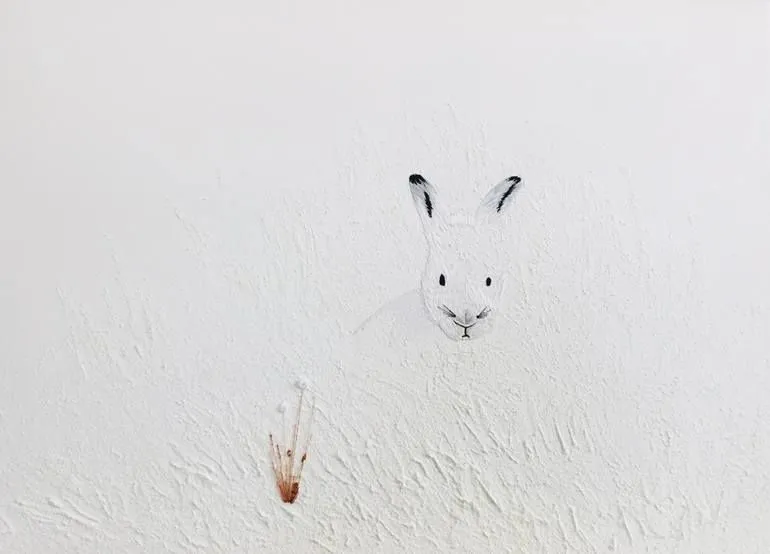
For most of its history, embroidery decorated something else. A coat, a vestment, a flag, a cushion: the stitching was magnificent and it was never the point. The object had a job, and the thread dressed it. What changed in the last half-century is small to describe and enormous to see: the embroidery became the object. Nothing else to wear, nothing to consecrate, nothing to sit on. A surface of thread, made to be looked at, full stop.
That shift has a name, contemporary embroidery, and it confuses people because the word seems to describe a date. It describes a status.
Contemporary embroidery: an intent, not an era
The stitches are not new. Chain stitch, satin stitch, long and short stitch: all of them are centuries old, some millennia. What defines contemporary embroidery is intent, and intent changes everything downstream of it.
| Traditional embroidery | Contemporary embroidery | |
|---|---|---|
| Purpose | Ornament for a functional object | The work itself |
| Motifs | Inherited repertoires: florals, monograms, liturgical and regional patterns | Whatever the artist has to say |
| Support | Garment, linen, furnishing | Stretched canvas, paper, metal, found objects, the hoop abandoned or kept ironically |
| Presentation | Worn, used, stored folded | Hung, lit, exhibited |
| Judged by | Regularity, conformity to the model | What painting and sculpture are judged by |
The last row is the demanding one. When embroidery stops being decoration it loses the safety of the well-executed model. It must hold a wall on the strength of composition, light and presence, in a room where paintings are hanging.
How embroidery got to the museum
Three currents carried it there. The first came from fine art: sculptors and painters reached for textile because of what it carries. Louise Bourgeois turned to fabric works late in life; Tracey Emin stitched confessions into appliqué; Ghada Amer embroiders directly over painting. For these artists thread was not a craft borrowed for charm. It came loaded: domesticity, repair, time, the long history of unpaid feminine patience. Much of the critical force of textile art comes from taking a medium once dismissed as “women’s work” and hanging it, unapologetic, where the oil paintings go.
The second current came from the ateliers. The couture embroidery houses, Lesage first among them, kept alive techniques that would otherwise have died with the trades that used them: the Lunéville hook, goldwork, feather and bead work. Those skills leak. People trained for the runway carry the techniques somewhere quieter and slower, and some of us point them at the wall instead of the body. I am one of that current, and this site is what leaking looks like.
The third current is the recent one: a hand-embroidery revival that grew up on Instagram, where thread photographs seductively and a timelapse of a filling stitch is its own small theater. It brought an enormous new public to the needle, and artists like Danielle Clough or Debbie Smyth built real audiences through it. It has one honest limit that every embroiderer knows: a screen flattens exactly what makes the medium. Texture, relief, the way the surface changes as you walk past it. The photograph recruits the viewer; only the object converts them.
Embroidery hung like a painting
Here is the part almost nobody writes about, and the part I care most about: what an embroidery is as a hanging object.
Worked on painter’s canvas stretched on its wooden frame, an embroidery hangs exactly as a painting does. No glass, no box, no frame swallowing it. That choice, which looks like a detail of framing, decides how the work is experienced:
- The relief lives. Stitches stand off the surface by a millimetre or several. Under raking light, every ridge throws its small shadow, and the work changes as the day moves. Behind glass, this dies; the reflection flattens the one thing paint cannot do.
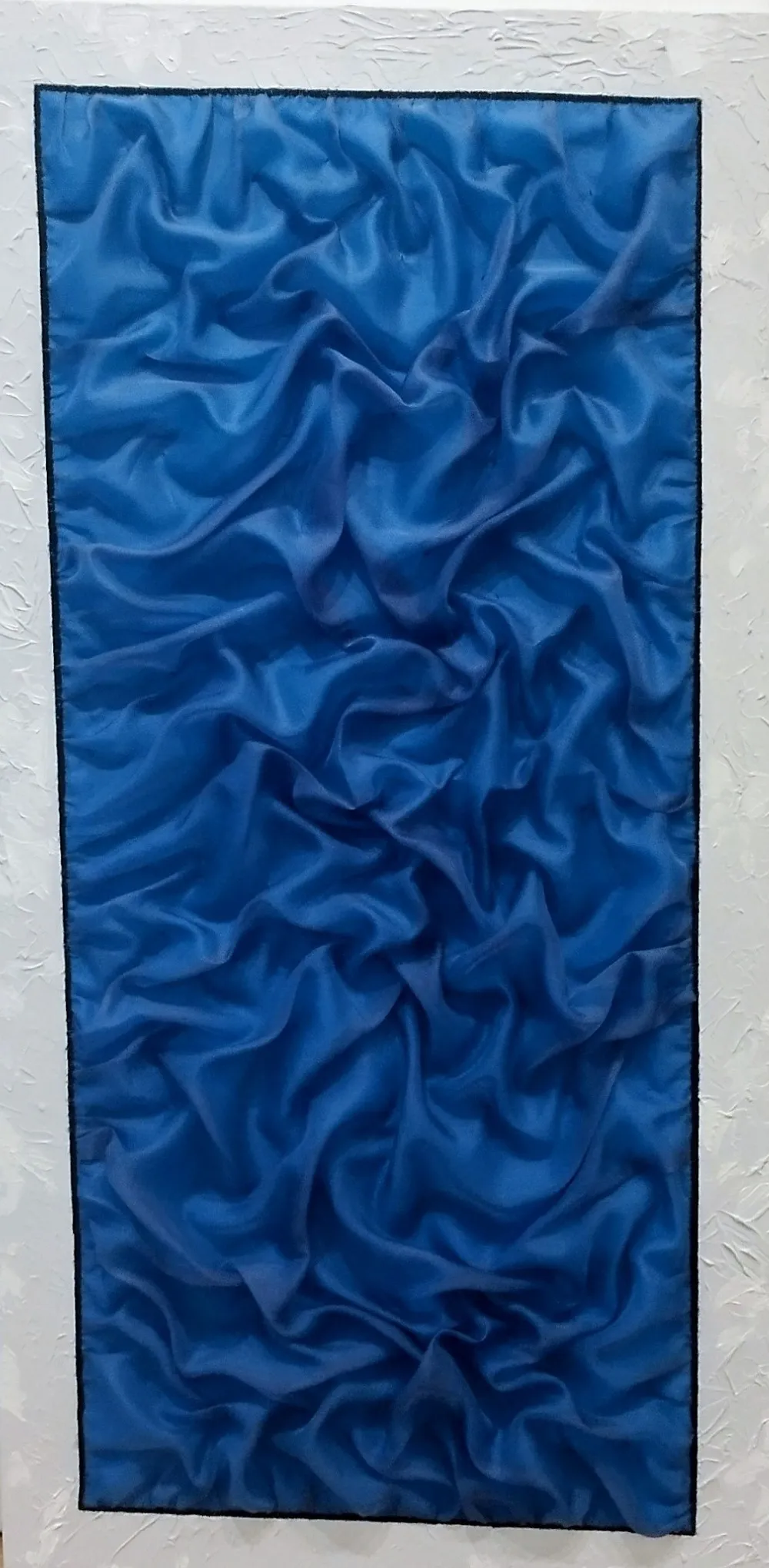
- The material is present. Visitors lean in, then step back, then lean in again. The double reading, image from afar and matter up close, is the particular pleasure of thread. My pieces in leather and raffia, like Bleu or Satin noir, exist almost entirely for that second, closer look.
- It asks for trust. No glass means the work meets the room unprotected. That is less reckless than it sounds, which is the next section.
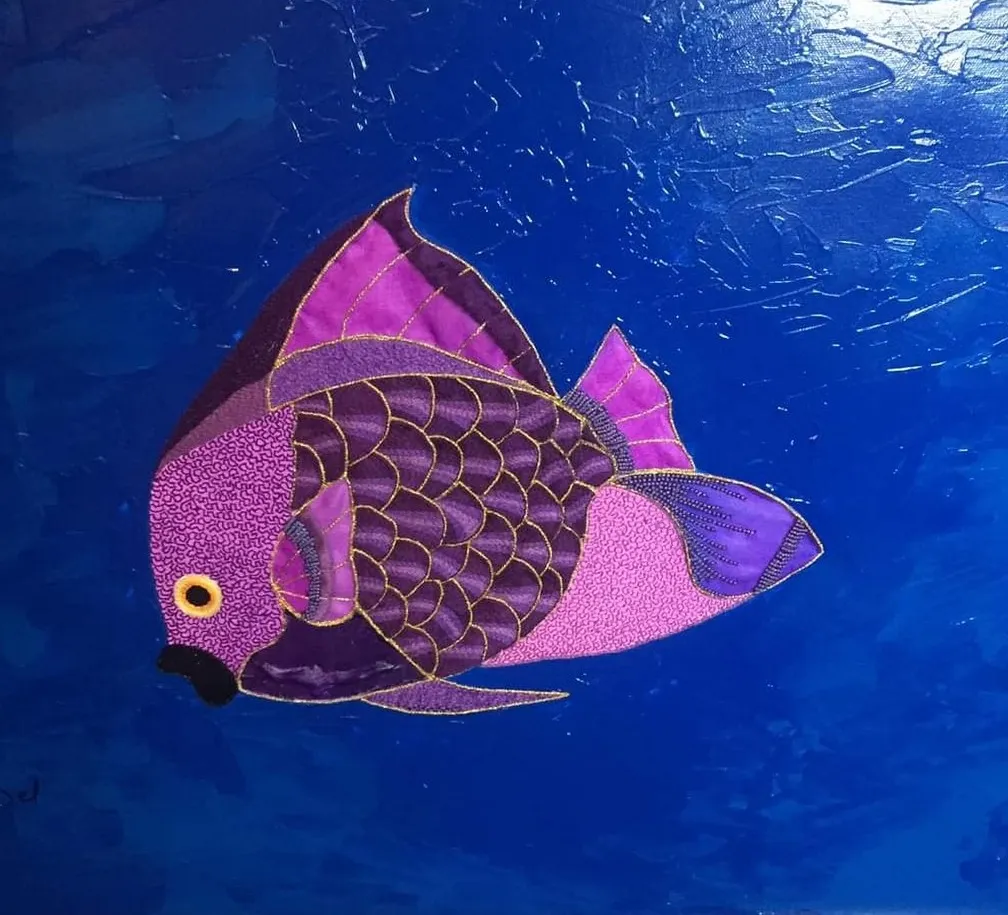
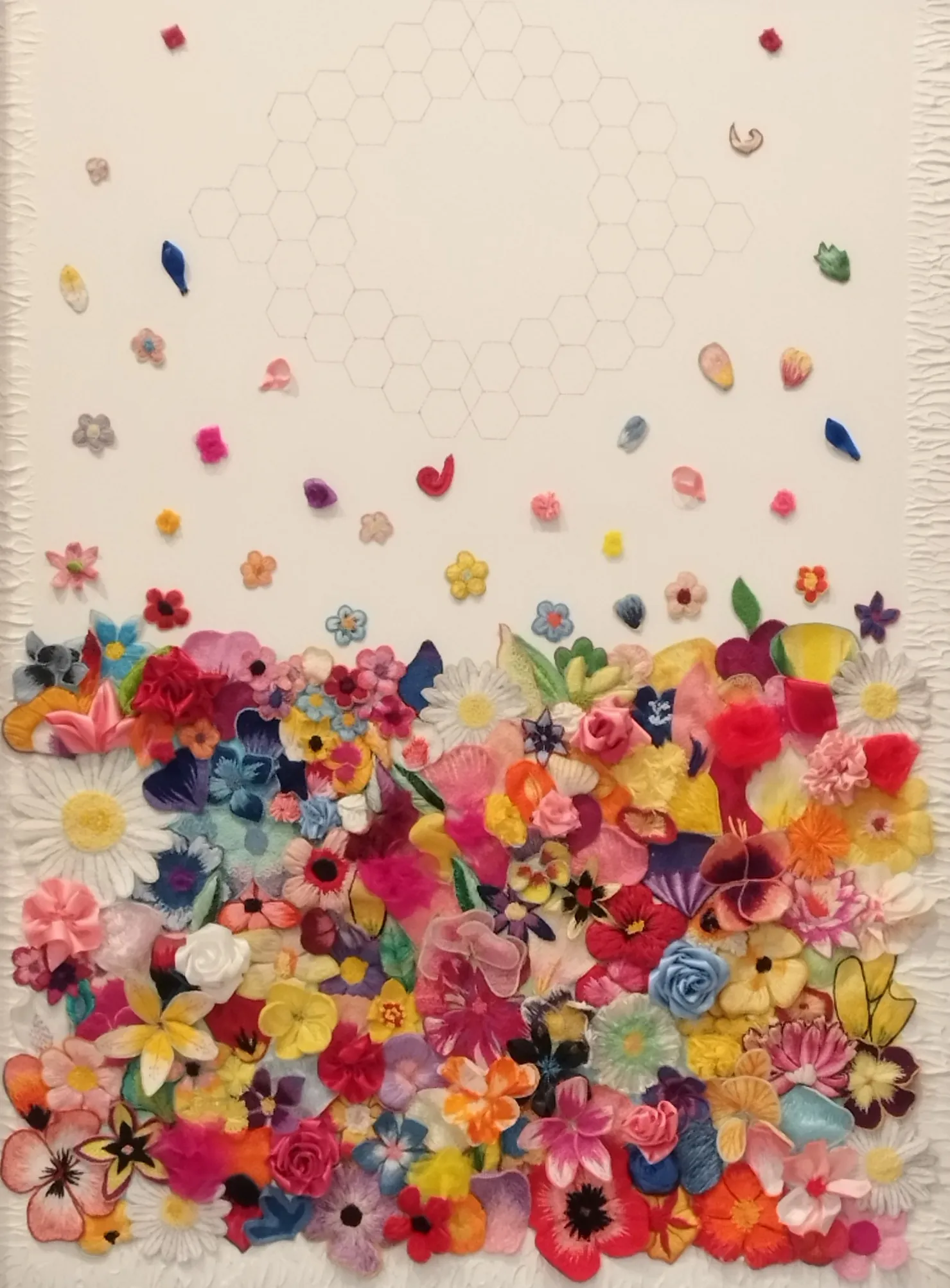
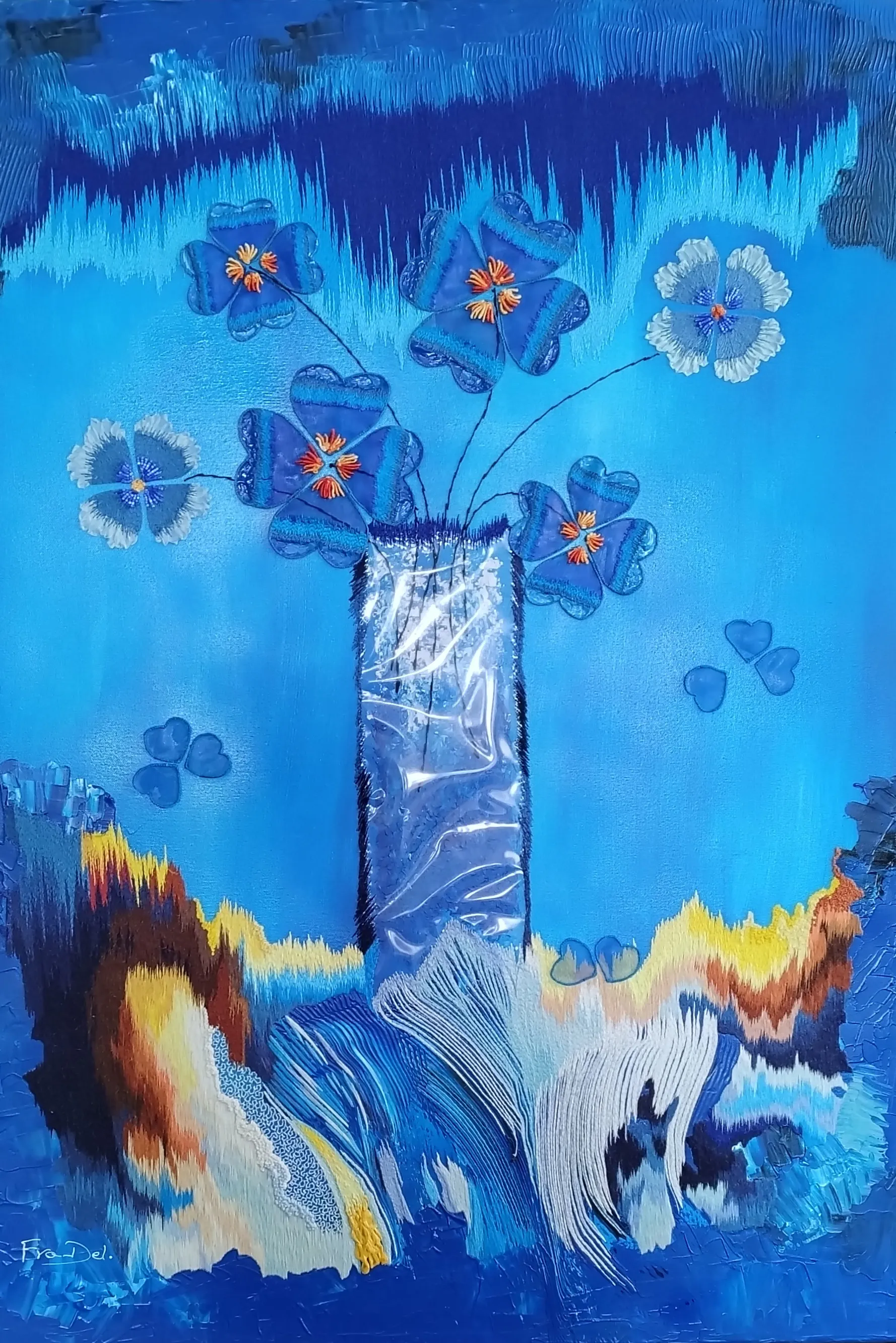
On my canvases the techniques of the couture atelier do the painting’s work: chained lines of the Lunéville hook where a painter would draw, needle-painted gradients where a painter would blend, gold thread and pearls where a painter would glaze light. Pieces like Soleil doré add flocked leather to the canvas, because the vocabulary of materials is open now. That openness is the whole gift of the contemporary turn.
Living with contemporary embroidery
Collectors ask two questions, usually in this order: will it last, and why does it cost what it costs.
It lasts. Textiles are among the oldest artworks that survive at all; goldwork vestments several centuries old still gleam in cathedral treasuries. Cotton, silk, glass beads and leather age slowly under three conditions that any painting also prefers: no direct sunlight, no damp wall, no radiator underneath. Uncovered thread gathers dust like any surface; a soft brush or a gentle pass of cool air once or twice a year is the whole maintenance. Sun is the one real enemy, and it is an enemy of watercolors and photographs too.
The price is mostly time. An embroidered canvas represents weeks to months of handwork; there is no print run, no edition, no faster version of the gesture. Add the rarity of the techniques themselves: the hands trained in Lunéville or goldwork are counted in small numbers and mostly employed by couture. An original embroidery is a dense object: hours, trained gesture and material, all of it visible at close range. Textile art has been moving from the craft fair to the gallery for two decades, and works in thread now sit in serious private and public collections. I would not advise anyone to buy thread as speculation. I would advise them to buy it the way one buys any art that will share a wall with your mornings: because it holds your eye longer than the wall does.
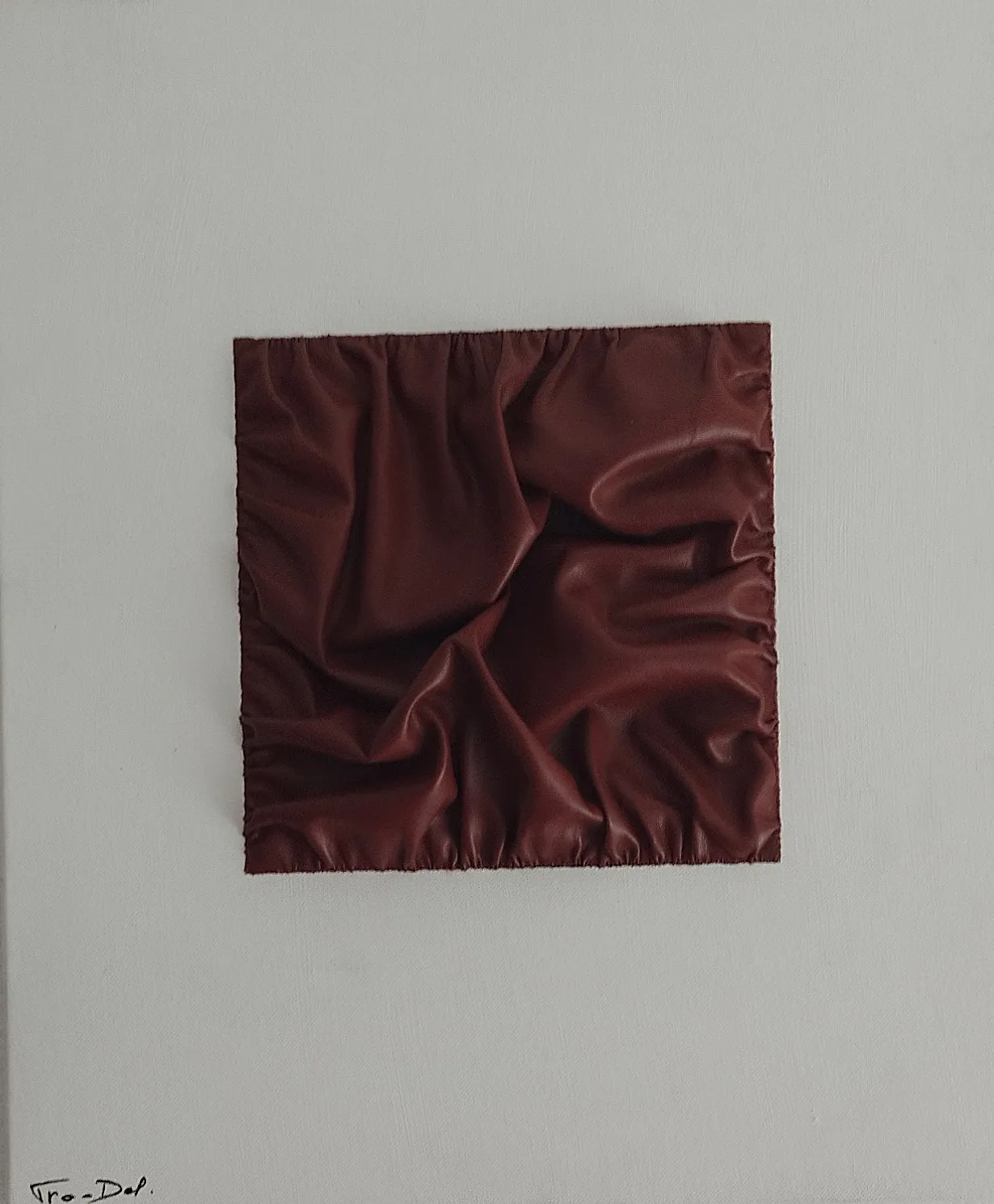
Brown Leather: one material, one fold, no subject
Questions people ask
What is contemporary embroidery? Contemporary embroidery is embroidery made as an autonomous artwork rather than as decoration for something else. The stitches may be centuries old; what changed is the intent. A contemporary embroidery exists to be looked at the way a painting is, and it often leaves the hoop for canvases or unconventional materials.
Is contemporary embroidery art or craft? Contemporary embroidery is both at once: the technique is a craft, and what is made with it can be art, exactly as with paint. Museums answered the question in practice by hanging textile works by Louise Bourgeois or Tracey Emin alongside painting and sculpture in their major collections.
How is contemporary embroidery displayed without glass? Contemporary embroidery is displayed without glass by working it on canvas stretched on a wooden frame, hung exactly like a painting. The relief of the stitches then catches side light, which is much of the point. It asks the care of any textile: no direct sun, no damp wall, occasional gentle dusting.
Does contemporary embroidery last? Yes, contemporary embroidery lasts remarkably well: textiles are among the oldest surviving artworks we have, and medieval embroideries still show their gold. Kept from direct sunlight and humidity, cotton, silk and glass beads age slowly. Cared for like a painting, an embroidered canvas will outlive its buyer.
The artist behind Fra-Del trained at École Lesage in Paris and works Lunéville crochet, needle painting, gold thread and pearls on canvas. About Franck Delorme, embroidery artist →
The artworks that use this technique
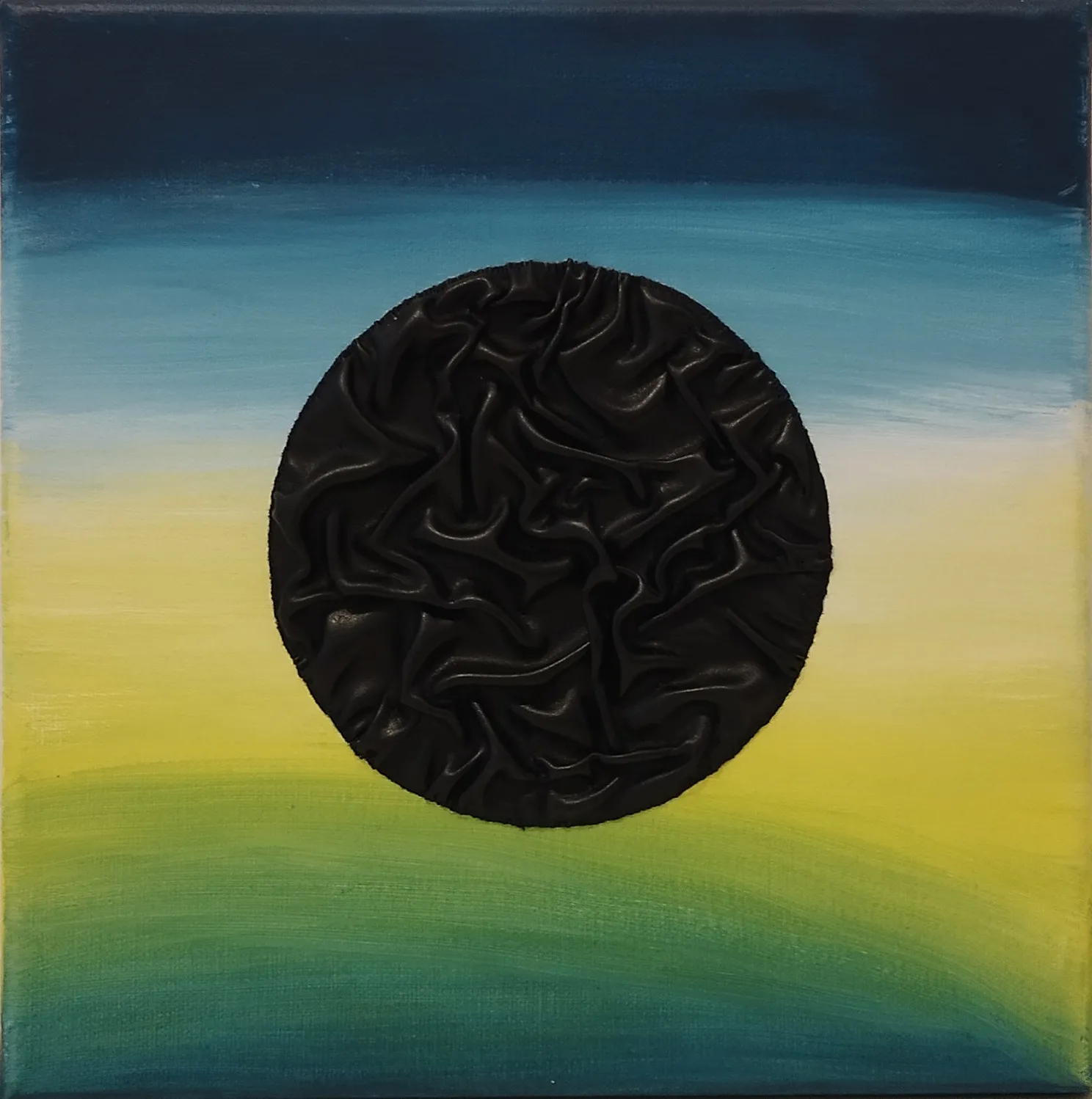
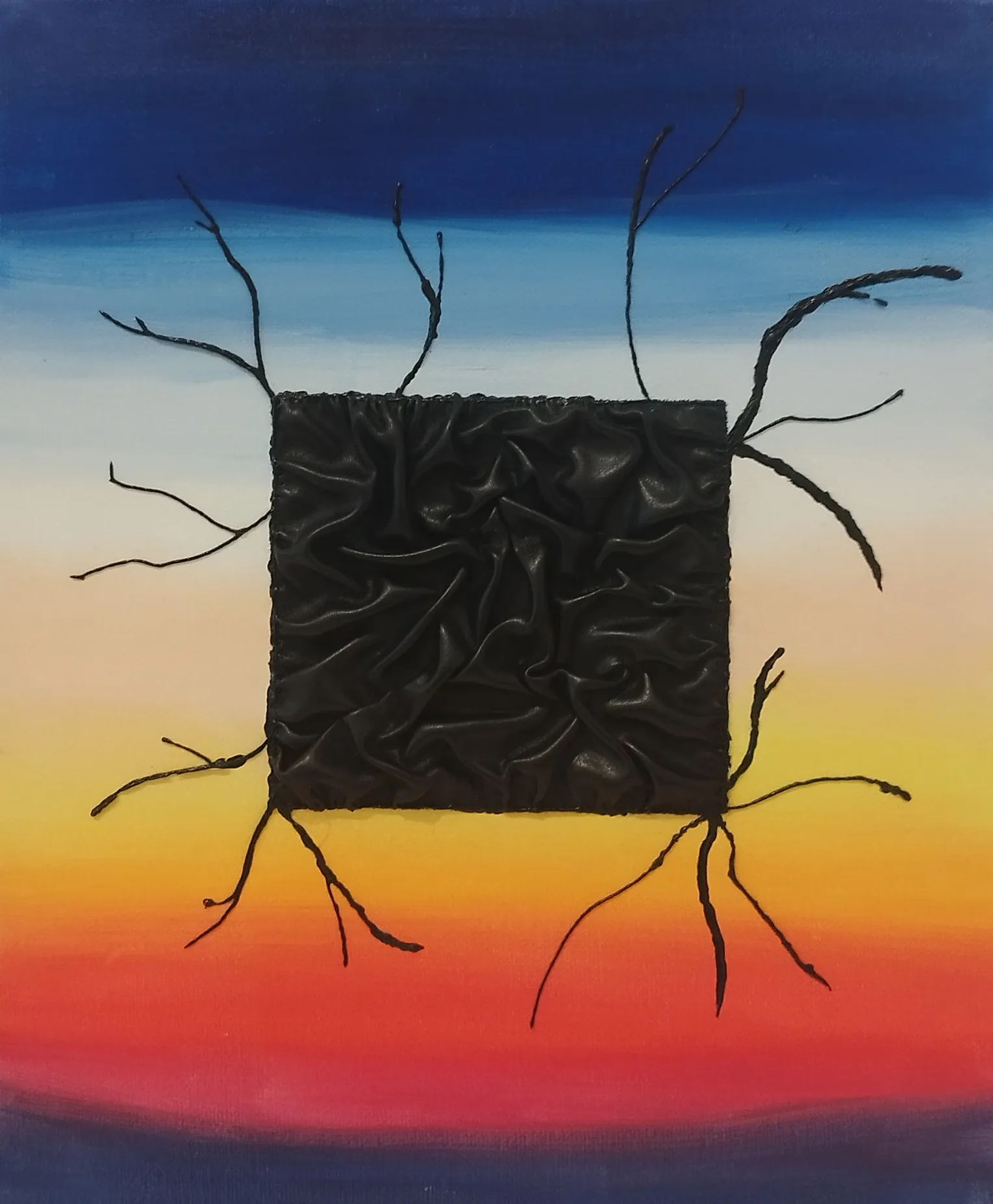
Discover the works to come
Leave your address and we will let you know whenever a new work is under way or finished.