Haute couture embroidery: the houses, the techniques, the gestures
August 14, 2026
Contents
- What is haute couture embroidery?
- The haute couture embroidery houses: who embroiders for whom
- The techniques of haute couture embroidery
- From sample to dress: the path of a haute couture embroidery
- The hours and the petites mains of haute couture embroidery
- Training in haute couture embroidery
- Questions people ask
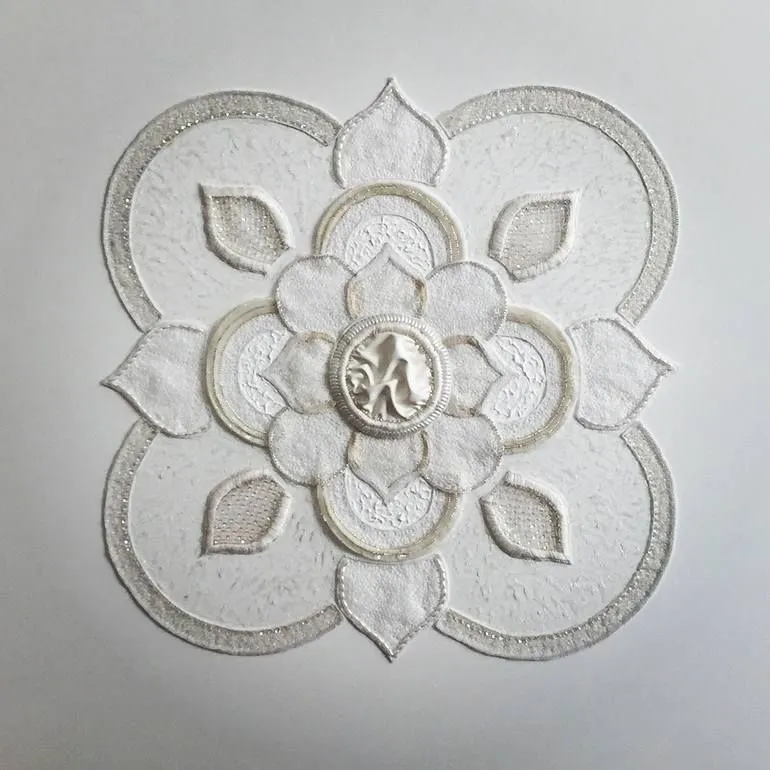
A haute couture embroidered dress is never embroidered as a dress: it is embroidered flat, in pieces, before it exists as a garment. That detail, which almost no article mentions, contains the whole organisation of a world: specialised houses, precise gestures, pricing counted in hours of handwork. I trained at the École Lesage, at the heart of that world; here is how it works, from the houses to the gestures, from the sketch to the dress.
What is haute couture embroidery?
Haute couture embroidery is the hand embellishment of haute couture garments: beads, sequins, precious threads, feathers and materials applied to the collections’ fabrics, almost always by specialised embroidery houses working for the fashion houses. It differs from hobby embroidery in its techniques (the Lunéville hook first among them), its workshop organisation, and its economics: everything is counted in hours of skilled handwork. It is also the matrix of French art embroidery: most French embroidery artists, myself included, come out of its schools and its gestures.
The haute couture embroidery houses: who embroiders for whom
The public knows Chanel and Dior; it rarely knows the houses that embroider their collections. The landscape holds in a few names:
| House | Landmarks | Signature |
|---|---|---|
| Lesage | Michonet archive (1858), taken over by Albert Lesage in 1924, Chanel since 2002 | The reference: Lunéville work, beading, tens of thousands of archive samples |
| Montex | Founded 1939, also at Chanel | Chanel’s other embroidery: needlework and the Cornely machine |
| Vermont | Paris, historic partner of the great houses | Traditional needle embroidery |
| Hurel | Since 1870 | Embroidery and exceptional fabrics under one roof |
Add independent ateliers in Paris and beyond, and the place that changed the trade’s geography: le19M, opened by Chanel in 2021 at the porte d’Aubervilliers, gathering Lesage, Montex, Lemarié’s featherwork and other crafts under one roof, with a gallery open to the public. The long history of these houses is told in the article Embroidery history.
The techniques of haute couture embroidery
Four families of gestures make up most of the collections:
- The Lunéville hook, the reigning gesture of the workshops: a continuous chain stitch worked from the back, applying pre-strung beads and sequins at a speed no needle approaches. Its full mechanics are in the article Tambour embroidery.
- Beading and sequins, couture’s visual identity: bead types, placements, vermicelli, explained in the article Bead embroidery.
- Gold thread and purl, inherited from ornamental embroidery, for ceremonial pieces: see the article Goldwork embroidery.
- Materials: feathers, ribbons, leather, raffia, gazar, everything a hand can fix to fabric. It is the freest territory, the one where each house keeps its secrets.
Needle embroidery (long and short stitch, traditional stitches) completes the repertoire for figurative motifs and finishes.
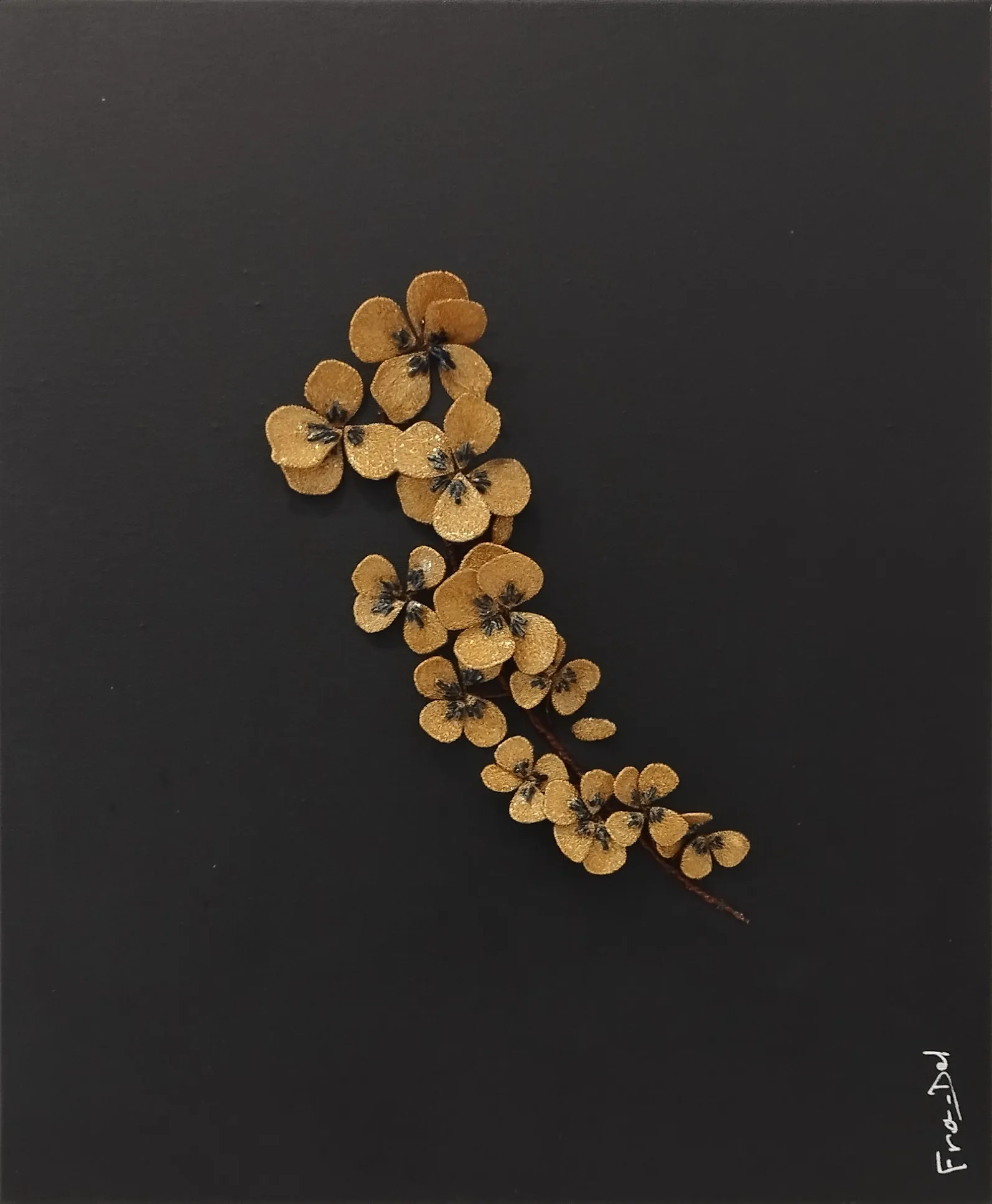
Gold thread on the hook, the couture houses’ technique
From sample to dress: the path of a haute couture embroidery
Here is the process the articles never tell, though it structures the entire trade:
- The sketch. The fashion house sends an intention: a drawing, a material, sometimes just a collection mood.
- The sample. The embroidery house translates: it proposes one or several embroidered samples, trial squares where materials, densities and colours are decided. At Lesage, tens of thousands of archived samples feed this dialogue.
- The costing. The chosen sample is priced in hours of handwork: that is the real accounting unit of haute couture embroidery, from which the price follows. Densifying a motif means adding hours.
- Embroidering flat. The pattern pieces are cut, the seam allowances reserved, and each piece is stretched on the frame and embroidered flat. This is the point everyone misses: you do not embroider a dress, you embroider pieces of a dress.
- Assembly and matching. The sewing atelier assembles the garment; the motifs must match across the seams, which is prepared from the drawing stage. A failed match cannot be fixed.
The collections calendar compresses all of this into a few weeks, samples included. That pressure, as much as the savoir-faire, is what forges the workshops’ hands.
The hours and the petites mains of haute couture embroidery
The orders of magnitude describe the trade better than adjectives: around 130 hours for a simple jacket, 300 to 2,000 hours for a fully embroidered dress, and summits for the exhibition pieces, like the Van Gogh tribute jackets embroidered by Lesage for Saint Laurent in 1988, with their hundreds of thousands of sequins and beads. Those hours belong to the petites mains, the qualified artisans of the workshops: years of training before touching collection pieces, and anonymity as a condition. When people talk about the price of haute couture, they are talking first of all about those hours.
Training in haute couture embroidery
Three main doors: the École Lesage, at le19M, teaching from a few-hour introduction course to the professional cycle of about 150 hours, in the workshops’ own progression (chain stitch first, for a long time, before the first bead); the CAP broderie, the French vocational route; and Lunéville, where the conservatory passes the technique on in its home town. I trained at the École Lesage, and I keep one conviction from it: this embroidery is learned through the repeated gesture, not through reading. Start with a short course; your hands will decide the rest.
Questions people ask
How many hours does haute couture embroidery take? Haute couture embroidery is counted in hundreds of hours: around 130 hours for a simple jacket, 300 to 2,000 hours for a fully embroidered dress, and the exceptional pieces exceed everything, like the Van Gogh tribute jackets embroidered by Lesage for Saint Laurent in 1988, covered in hundreds of thousands of sequins.
Why is haute couture embroidery done before the garment is assembled? Haute couture embroidery is done before assembly because the fabric must be stretched flat on the frame: the already-cut pattern pieces are embroidered with the seam allowances left in reserve, then the sewing atelier assembles the garment, matching the motifs across the seams. Embroidering an assembled dress would be impossible to tension properly.
What is a petite main in haute couture embroidery? A petite main is a qualified artisan of the haute couture workshops, embroiderers included: hands trained over years, who execute the collection pieces in the anonymity of the ateliers. The term, affectionate and respected in the trade, states a simple truth: every embroidered dress is the work of several highly experienced people.
What is Chanel’s le19M? Le19M is the building Chanel opened in 2021 at the porte d’Aubervilliers in Paris to gather its craft houses: Lesage and Montex for embroidery, Lemarié for feathers, and other ateliers. It also houses the École Lesage and a gallery open to the public, which makes it the best place to see haute couture embroidery up close.
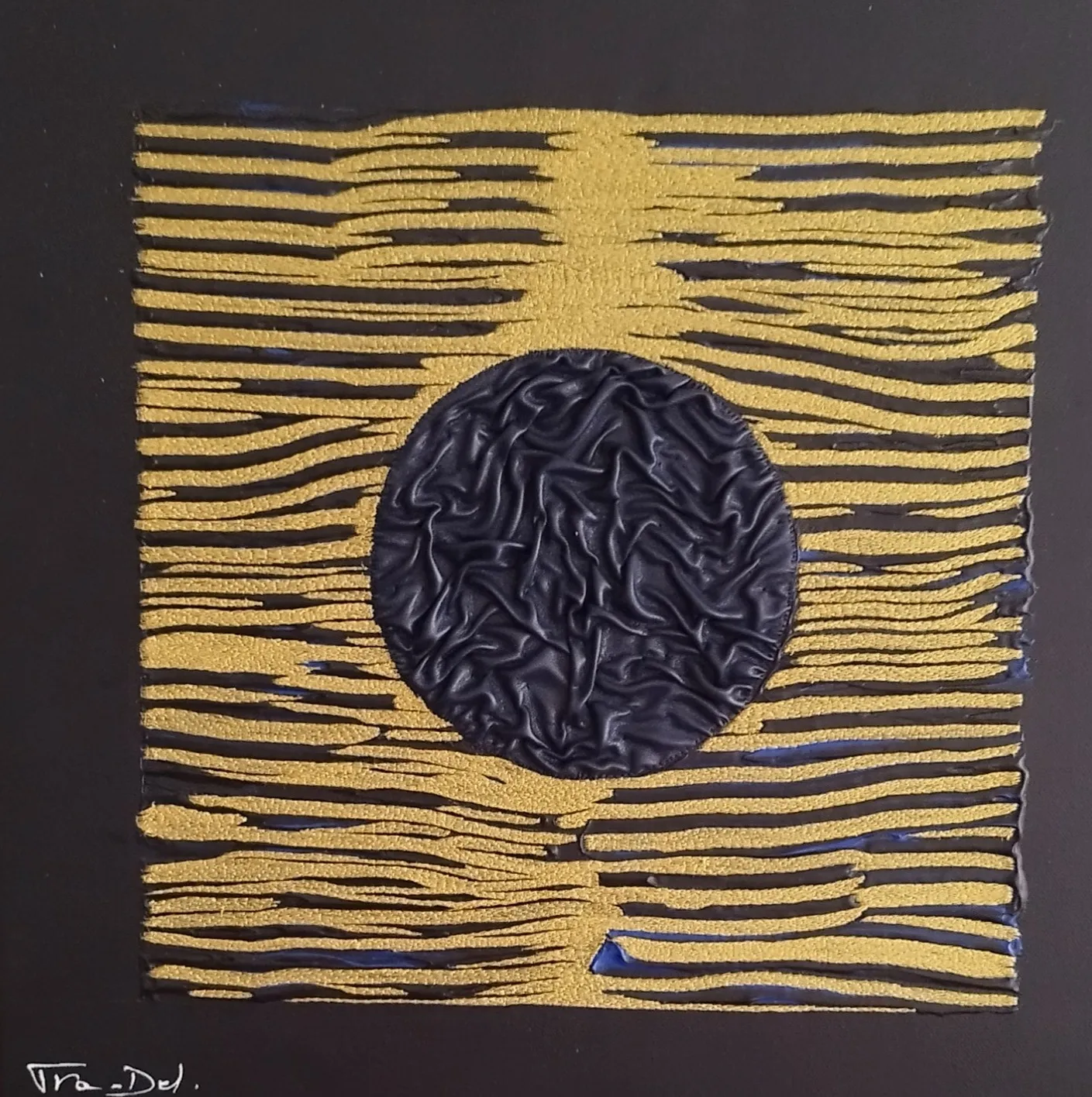
The artist behind Fra-Del trained at the Lesage school in Paris and applies couture gestures to his embroidered canvases. About Franck Delorme, embroidery artist →
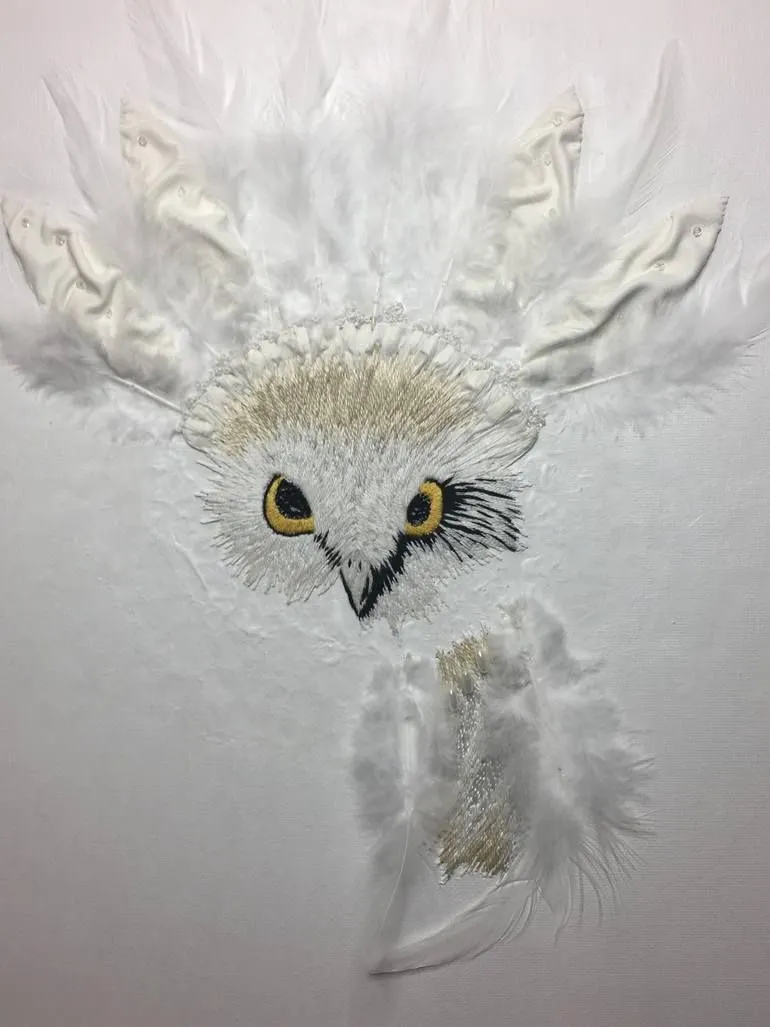
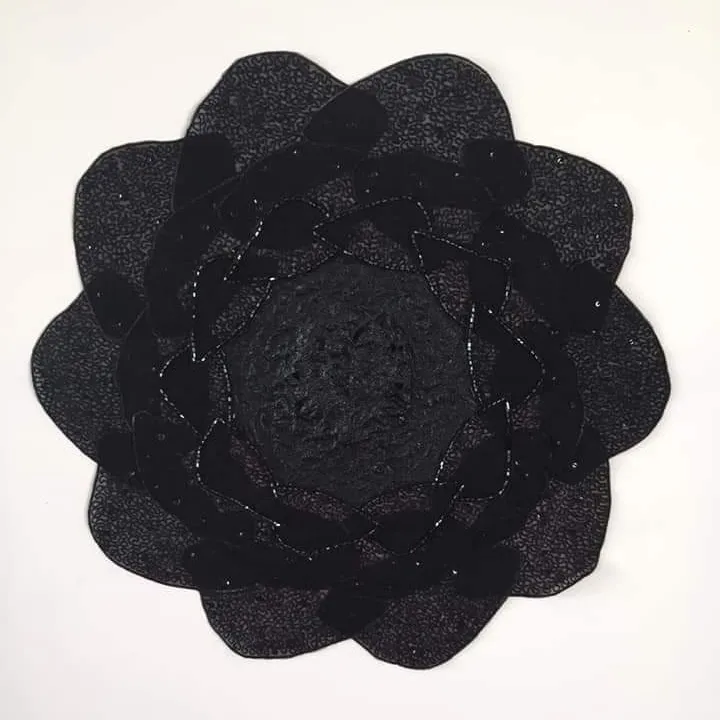
The artworks that use this technique
Discover the works to come
Leave your address and we will let you know whenever a new work is under way or finished.