Tambour and Lunéville embroidery: how the hook technique works
August 6, 2026
Contents

Tambour embroidery is chain stitch worked with a fine hook instead of a needle. The fabric is stretched drum-tight on a frame, the hook pierces it from above, catches the thread held underneath, and pulls up a small loop through the previous one. Each loop locks the last, so the stitches build into a continuous chain. Because the thread never has to be pulled all the way through the fabric, the same gesture also attaches beads and sequins faster than any needle technique. That speed is why the haute couture embroidery ateliers of Paris still embroider their gowns this way.
Lunéville embroidery is the French couture branch of the same technique. If you have searched both terms and wondered whether they name different crafts: they name the same movement, with different histories attached.
The three names of tambour embroidery
| Name | Where the name comes from | What it means in practice today |
|---|---|---|
| Tambour | From tambour, French for drum: the embroidery frame is stretched like a drum skin. The hook itself reached Europe from Asia in the 1700s | The umbrella term: any hook-made chain-stitch embroidery, on any fabric, usually with the thread on the visible face |
| Lunéville | From the town in Lorraine whose workshops refined the technique from about 1810 | The couture version: worked on sheer fabric from the back, with beads and sequins strung on the working thread before you begin |
| Aari (zardozi) | From India, where the technique was born; the ancestor of the other two | Hook embroidery worked from the front, often in metal thread on heavier cloth |
A usable rule: all Lunéville embroidery is tambour, but tambour on a denim jacket is not Lunéville. Suppliers mix the words freely, so when you buy tools, check the object, not the label. The hook is the same either way.
Where Lunéville embroidery comes from
The workshops of Lunéville began using the hook around 1810, at first to imitate expensive lace with white chain stitch on tulle. In 1865 an embroiderer of the town, Louis Ferry-Bonnechaux, started fixing beads and sequins with the same stitch, and this beaded variant, the point de Lunéville, is what made the town’s name. Whole ateliers in Lorraine lived from it through the early 1900s, embroidering for the fashion houses of Paris.
The couture link never broke. The Maison Lesage, founded in 1924 on the archives of the embroiderer Michonet and owned by Chanel since 2002, still executes its collections in Lunéville work, and its school in Paris teaches the technique in the same progression it used a century ago: chain stitch first, on organza, for hours, before a single bead is allowed on the thread. I trained there, and the discipline is the point. The gesture has to become automatic before it can become fast. In Lunéville itself, the château houses a conservatory that keeps the regional archive and still trains embroiderers. The full fresco, from Bayeux to today’s ateliers, is told in the article Embroidery history.
How the tambour embroidery stitch works
Descriptions of tambour tend to stop at “chain stitch with a hook.” The mechanics are worth two minutes, because they explain both why the technique is fast and why beginners drop stitches.
You work with both hands. The right hand (say) holds the hook above the frame like a pen. The left hand lives under the frame and does nothing but present the thread. One stitch:
- The hook pierces the taut fabric, open throat facing the direction of travel.
- The under-hand lays the thread into the hook.
- The hook pulls a loop of thread up through the fabric, through the loop of the previous stitch, which slides down and closes around it.
- Advance a few millimetres along the line and pierce again.
The skill hides in step 3. As the hook comes back up, its open throat wants to catch the weave of the fabric, so the handle makes a quarter-turn on the way up and a quarter-turn back on the way down, every stitch. That small rotation of the fingers, thousands of times an hour, is the whole apprenticeship. Once it settles into the hand, the chain advances at a speed no needle can match, because nothing is ever re-threaded and the full length of thread is never pulled through.
Chain stitch has one weakness you must respect: pull the free end and the whole line unzips like a sweater. Every run of stitches is therefore locked before the thread is cut, by passing the end through the last loop. Forget this once and a week of work can leave with a sleeve.
Beads and sequins: the point de Lunéville
Lunéville beading adds an idea that surprises everyone the first time: you embroider blind, from the back.
All the beads or sequins a motif needs are strung onto the working thread before the first stitch. The fabric, usually a sheer organza or tulle, is mounted with the design facing down. You work the chain on the back face; before each stitch, the under-hand pushes one bead up against the underside of the fabric, and the stitch locks it there. The beads bloom on the face you cannot see. Through sheer fabric you can watch them well enough to steer, which is one honest reason the tradition prefers organza.
This inversion is what makes couture beading economical. A needle embroiderer picks up sequins one by one from a tray. A Lunéville hand pre-strings them by the thousand and then simply stitches, one sequin per movement, without ever looking away from the line.
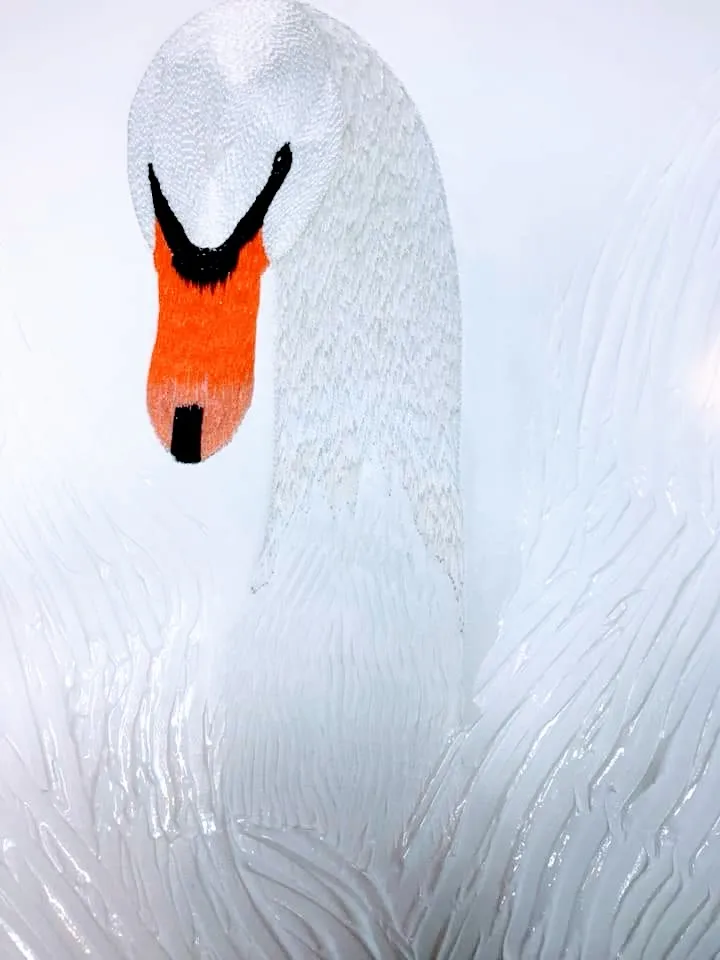
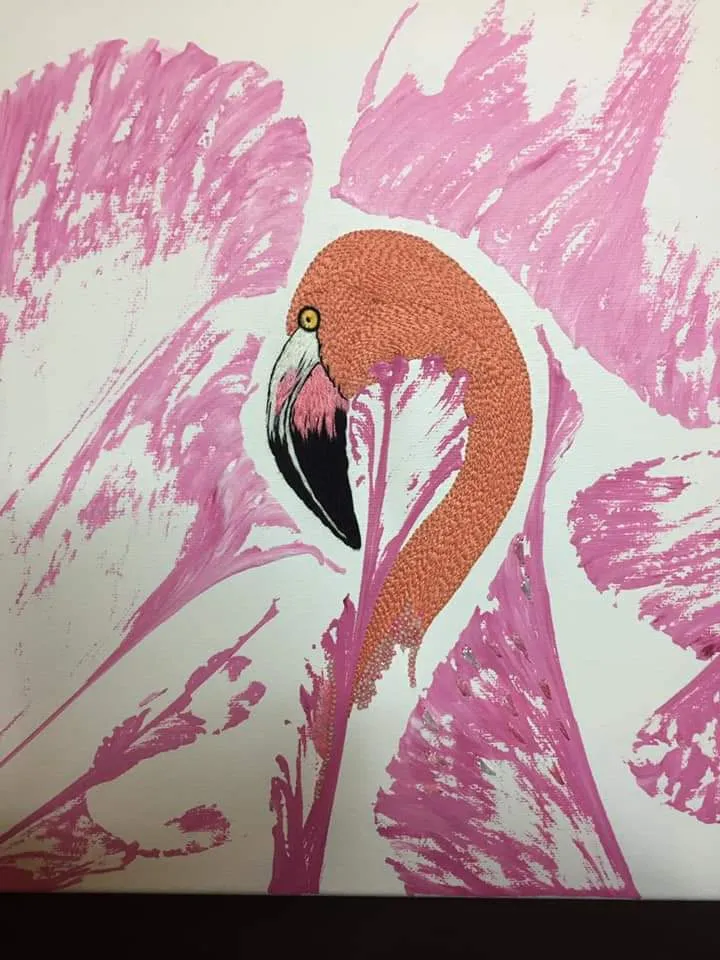
The chain stitch up close, on Odile’s neck
The tools to start tambour embroidery
The tool list is short, and precision matters more than budget.
- A tambour hook with a size 80 or 90 blade. The blade screws into a wooden handle and is swapped like a pen nib. Size 70 is the finest and passes a size 11/0 seed bead; larger numbers suit thicker thread. Buy a proper pointed tambour blade, not a knitting crochet, which cannot pierce fabric.
- A frame that holds the fabric drum-tight and leaves both hands free. A slate frame or a seated tambour frame is right; a hand-held hoop fails on both counts. Tension is not comfort but a working condition: on slack fabric the hook catches and the loops miss.
- Silk organza to learn on. You can see your under-hand through it, and later it is the classical ground for beading. Cotton organdie also works.
- A tightly twisted, glazed thread. Fil à gant (gloving thread) or a glazed hand-quilting cotton. Ordinary sewing thread shreds against the hook’s throat within minutes, which beginners misread as their own fault.
- Later, pre-strung beads. Hanks of strung seed beads transfer to the working thread in seconds. Loose beads cost you an evening of stringing per motif.
Expect the chain itself to come in two or three days of practice, and even beading to be possible within weeks. Expect regularity, the thing that actually distinguishes couture work, to take much longer. My own first month of samples had rows that wandered like a country road.
Why I work Lunéville embroidery on canvas
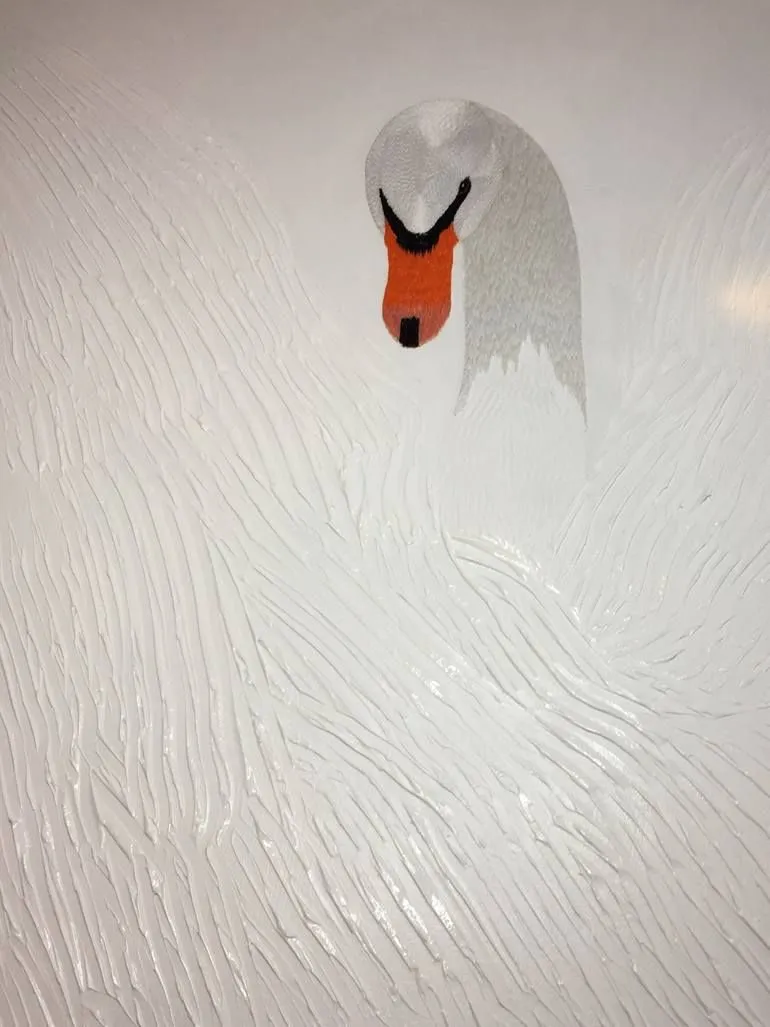
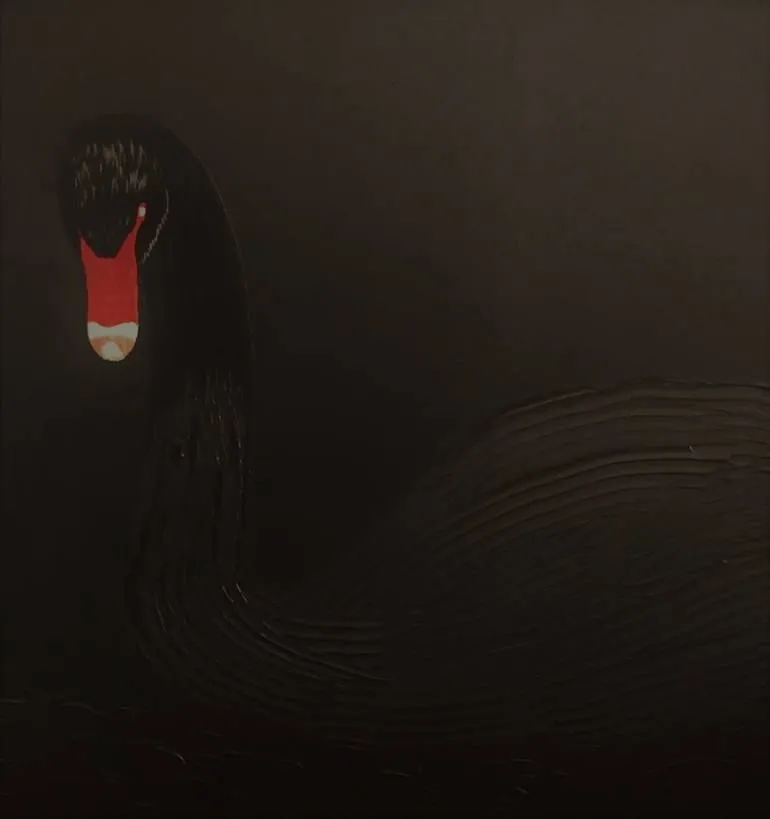
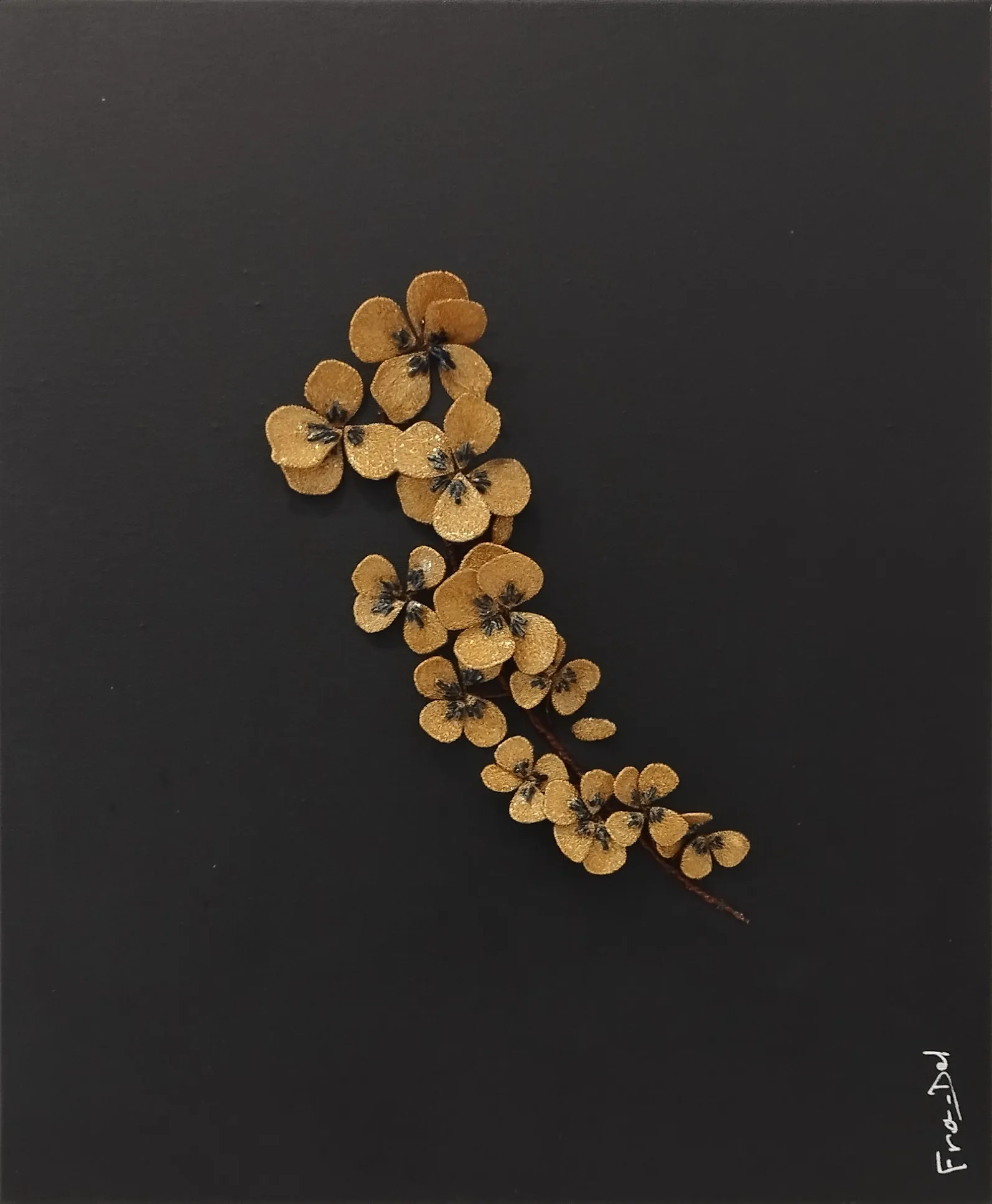
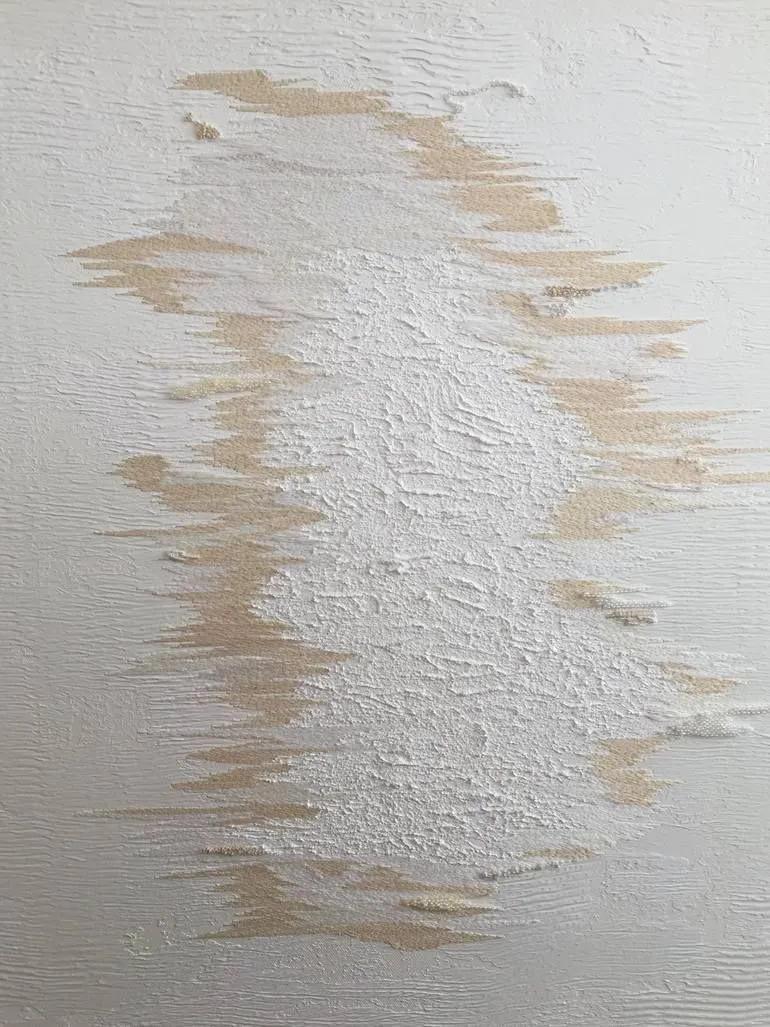
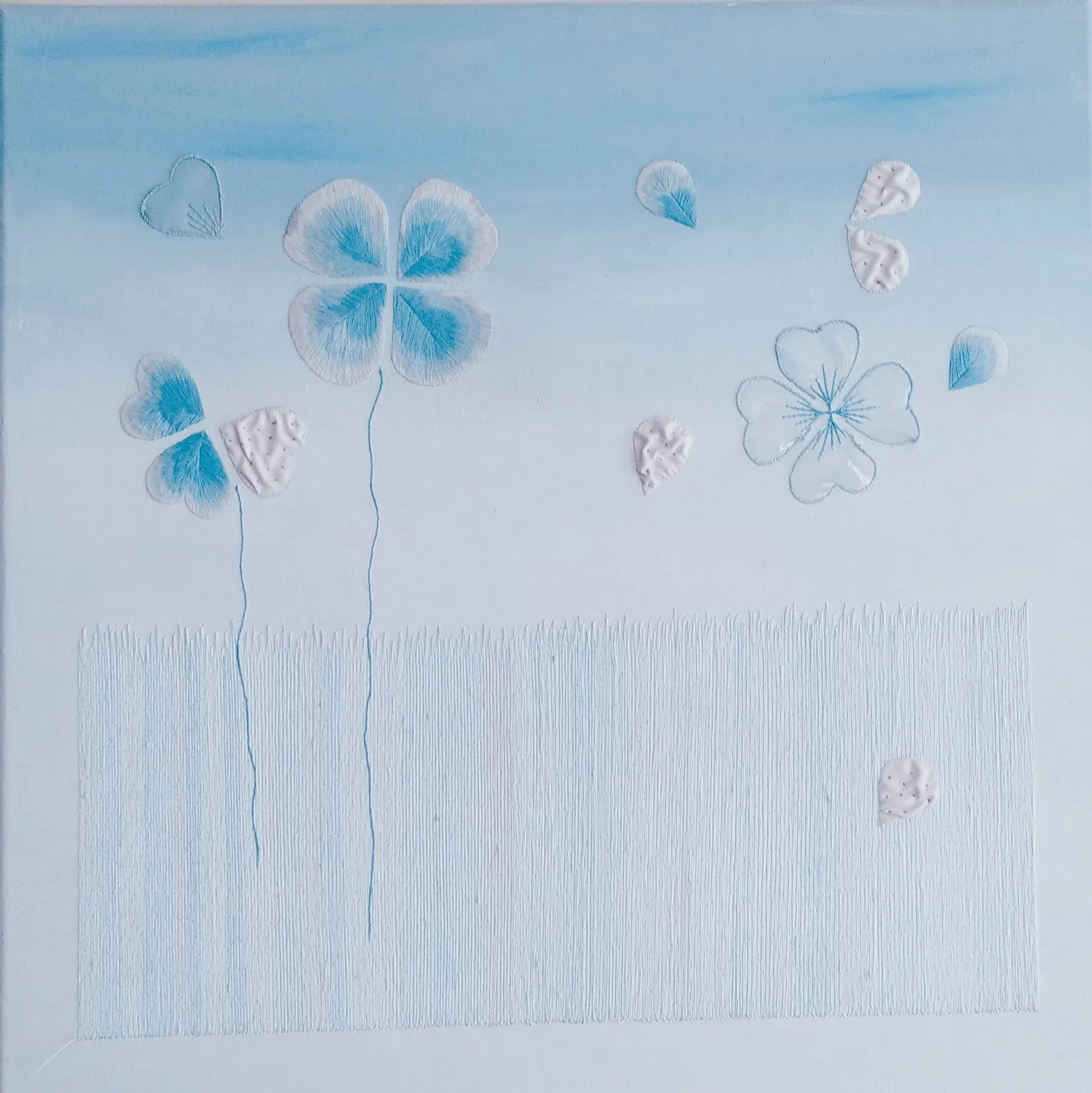
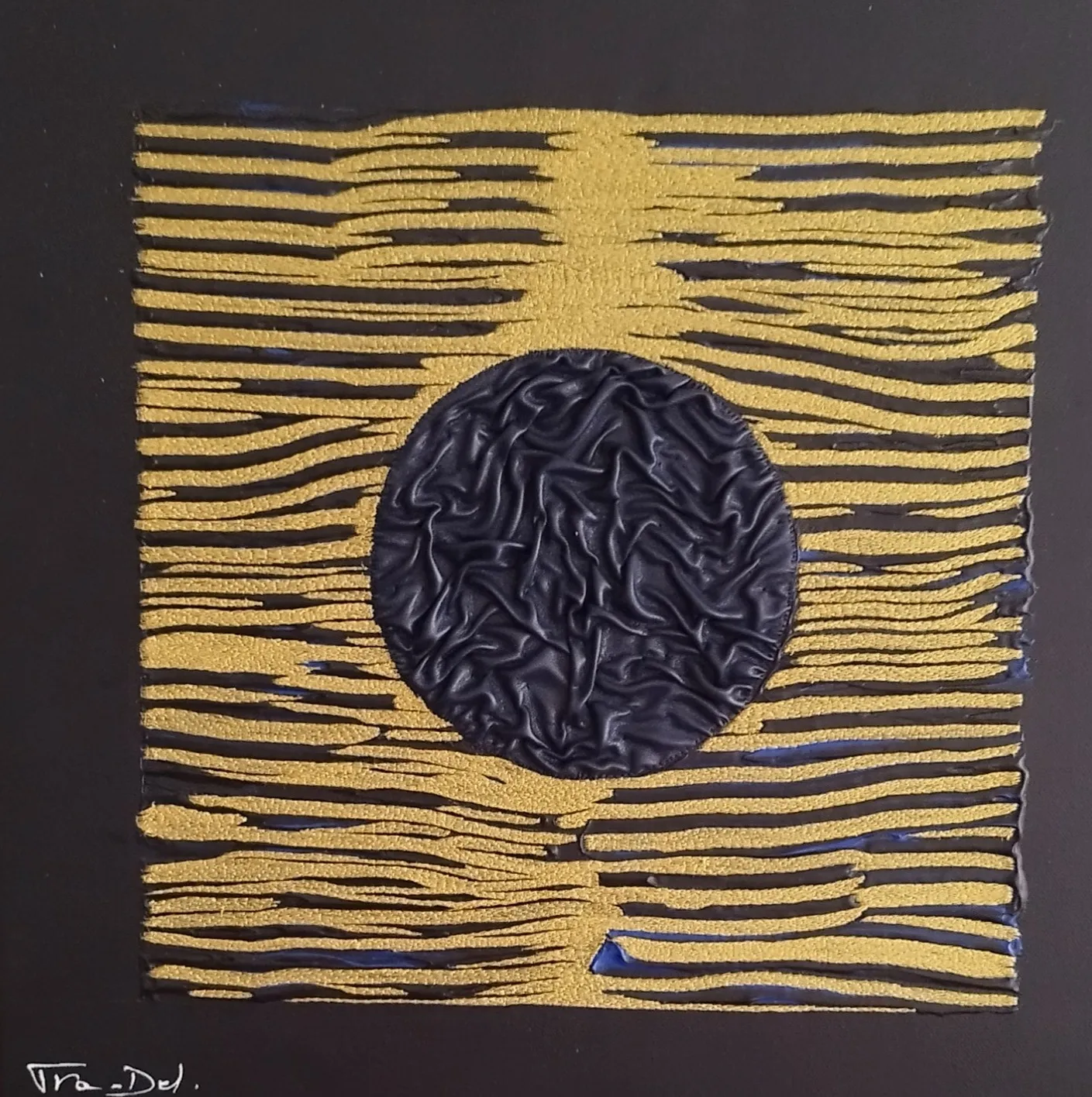
The tradition puts Lunéville work on transparent grounds. Most of my pieces put it on painter’s canvas, stretched on its wooden frame, where the crochet sits next to needle painting, gold thread and pearls. Works like Odile, Saint-Saëns and Reflets bleus are chained entirely with the Lunéville hook; in Fleur noire it carries the sequins.
Canvas argues with the hook. The weave is dense, every piercing costs force, and you lose the transparency that lets you watch your under-hand, so the blind side of the technique becomes truly blind. I accept the trade because the canvas lets embroidery hang as a painting does, without glass, and the stitch relief catches side light in a way tulle never will. I would still not teach a beginner on it; learn on organza, where the fabric forgives you.
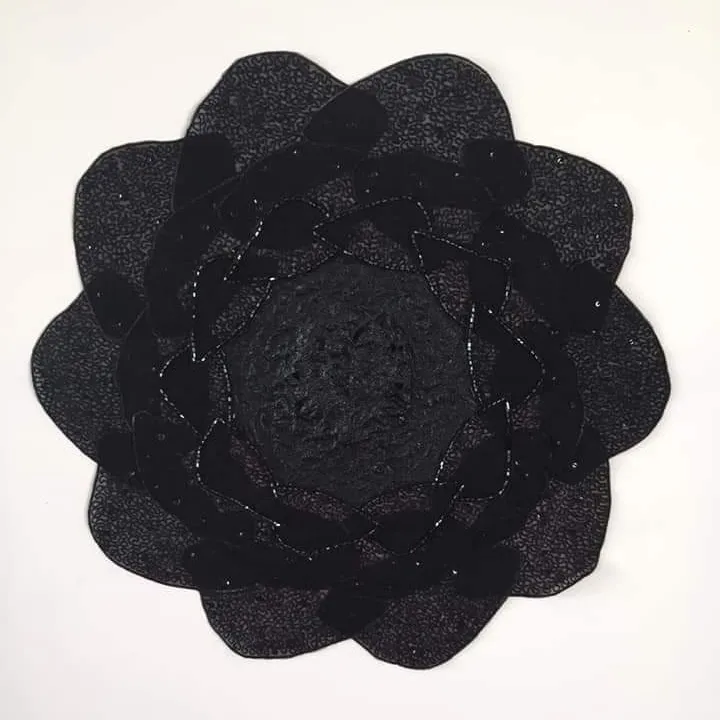
Black Flower: it is the hook that carries the sequins
Questions people ask
Is Lunéville embroidery the same as tambour embroidery? Yes, Lunéville embroidery and tambour embroidery rest on the same technique: a hook, taut fabric and chain stitch. Lunéville names the French couture practice, worked from the back of a sheer fabric with pre-strung beads and sequins, while tambour is the name of the wider family of hook embroidery.
Is tambour embroidery hard to learn? No, tambour embroidery is easier to begin than most embroidery, because the gesture is a single repeated movement. The quarter-turn of the hook takes a few days to become reflex. What takes months is evenness: chains in which no single stitch betrays a hesitation of the hand.
Can you do tambour embroidery on fabrics other than organza and tulle? Yes, tambour embroidery works on any woven fabric that can be stretched taut: crêpe, velvet, denim, leather or canvas. Stretch fabrics fail, because the ground must not give when the hook pierces it. The denser the weave, the more force every single stitch demands from the hand.
Do couture houses still use Lunéville embroidery? Yes, couture houses still use Lunéville embroidery today. The ateliers working for the Paris houses, Lesage first among them, execute beaded and sequinned pieces in this technique, because pre-strung embellishment on a continuous thread remains the fastest way a human hand can bead a surface evenly.
The artist behind Fra-Del trained at École Lesage in Paris and works in Lunéville crochet, gold thread and pearls on canvas. About Franck Delorme, embroidery artist →
The artworks that use this technique
Discover the works to come
Leave your address and we will let you know whenever a new work is under way or finished.