Embroidery history: the French thread, from Bayeux to haute couture
August 20, 2026
Contents
- The history of embroidery in one timeline
- The origins of embroidery, before written history
- Medieval embroidery: Bayeux and Opus Anglicanum
- Embroidery at the French court, from Versailles to L’Art du Brodeur
- Samplers: embroidery as schooling
- 1829: the machine that tips embroidery history
- Lunéville, the French embroidery of the 19th century
- Lesage and the ateliers: haute couture embroidery
- The revival: contemporary embroidery
- Questions people ask
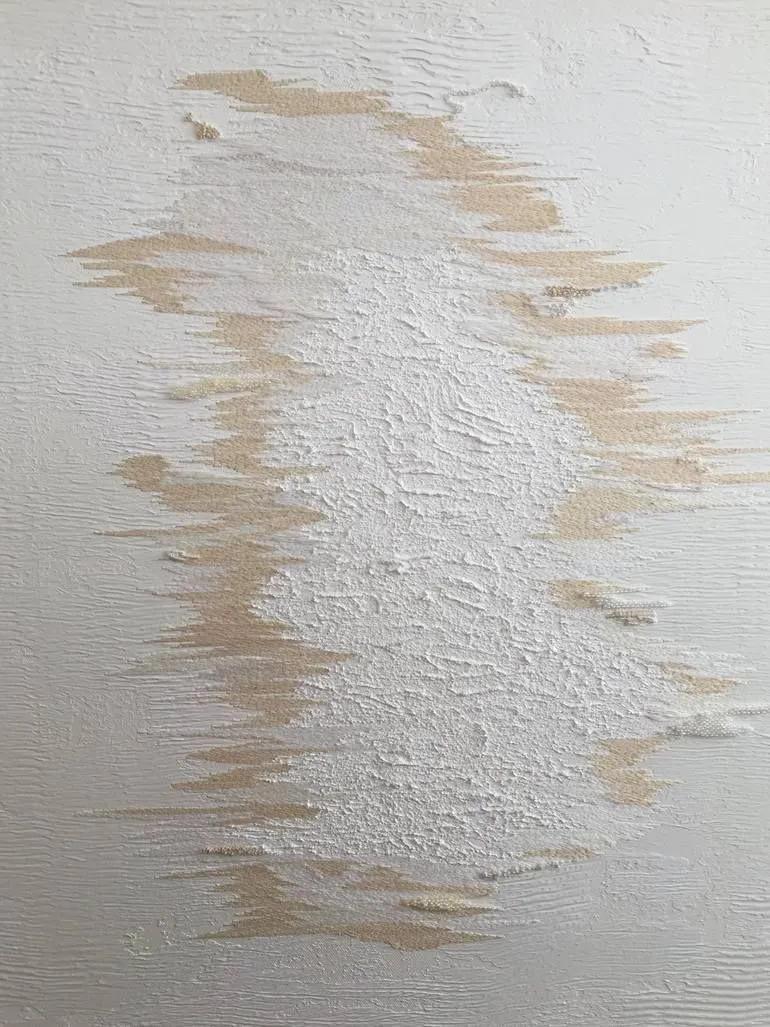
The most famous embroidery in the world carries a false name: the Bayeux Tapestry is not a tapestry but 68 metres of wool embroidery on linen, stitched in the 11th century. That misunderstanding sums up the fate of the medium: present everywhere in history, rarely named correctly. Here is that history, told by following its French thread, from Bayeux to the haute couture workshops, because it is the thread I know from the inside, and the one the English-language histories systematically leave out.
The history of embroidery in one timeline
| Period | What happens |
|---|---|
| c. 30,000 BC | Garments decorated with sewn beads (burials in Russia) |
| Antiquity | Silk embroidery in China, Scythian embroideries in Siberia |
| 11th century | The Bayeux Tapestry, wool embroidery on linen |
| 12th-14th centuries | Opus Anglicanum, the medieval summit, exported across Europe |
| 17th-18th centuries | Court embroidery: Versailles, the guilds, L’Art du Brodeur (1770) |
| 1829 | First embroidery machine, Josué Heilmann, Mulhouse |
| c. 1810-1865 | Lunéville: the hook, whitework, then beads and sequins |
| 1858 / 1924 | The Michonet atelier, taken over by Albert Lesage: couture embroidery |
| 2002-2021 | Chanel buys Lesage, opens le19M: the crafts pass on |
| Today | The revival: embroidery returns as a practice and as an art |
The origins of embroidery, before written history
Sewing to decorate is older than weaving. Russian burials around 30,000 years old preserve garments covered with rows of sewn ivory beads: not yet decorative thread, already stitched adornment. Thread embroidery appears wherever there is textile: China keeps the oldest surviving silk pieces, made before our era; the frozen tombs of the Altai have yielded intact Scythian embroideries; Egypt, India and the Andean world each have their own tradition. The English word itself travelled from France: embroidery comes from Old French, where broder meant to decorate the edge. Embroidery has no single cradle; it has hearths.
Medieval embroidery: Bayeux and Opus Anglicanum
Two summits frame the embroidered Middle Ages. The first is Norman: the Bayeux Tapestry, around 1070, tells the conquest of England across 68 metres of linen, in wools of a few colours, in stem stitch and couching. It is an embroidered news report, the longest textile narrative in existence. The second is English: Opus Anglicanum, the ecclesiastical embroidery of the 12th to 14th centuries, its faces worked entirely in split stitch and its gold grounds in underside couching, exported to every court and cathedral in Europe. Apprenticeships lasted seven to ten years: embroidery was an elite trade, as male as it was female, organised in guilds.
Embroidery at the French court, from Versailles to L’Art du Brodeur
From the 17th century, the centre of gravity moves to France. The embroiderers’ guilds there are old and powerful, and convents embroider for the court: the Filles de Saint-Joseph, in Paris, work monumental hangings for Versailles after designs from Charles Le Brun’s studio. The following century, the profession theorises itself: Charles Germain de Saint-Aubin, embroidery designer to King Louis XV, publishes L’Art du Brodeur in 1770, the first complete treatise of the trade, still cited by every textile historian. The embroidered court coat is then a social language: a man’s rank could be read in his gold thread facings.
Samplers: embroidery as schooling
While the court glitters, the whole of Europe learns to sew on samplers, those squares of cloth on which girls embroidered alphabets and motifs, at school or at home. Printed pattern books circulate from the 1520s; the oldest dated surviving sampler, Jane Bostocke’s, carries the year 1598. For three centuries embroidery was the first writing of millions of hands, and those humble exercises now fill the textile museums.
1829: the machine that tips embroidery history
The industrial turning point has a name and a town that almost every history forgets: Josué Heilmann, Mulhouse, 1829. His embroidery machine, improved and multiplied around St. Gallen in Switzerland, produced in hours what a hand did in weeks. Within two generations, everyday embroidery moved to the factory; the manual trade declined. The reaction came from England: William Morris’s Arts and Crafts movement gave the needle back its dignity as an art. And the hand fell back on its two fortresses, the ones the machine cannot reach: luxury, and art.
Lunéville, the French embroidery of the 19th century
It is precisely in that century of machines that a small town in Lorraine invented a faster gesture of the hand: in Lunéville, in the early 19th century, embroiderers adopted a fine hook to run chain stitch across white tulle, then, around 1865, the workshop reversed the gesture to apply pre-strung beads and sequins from the back. The Lunéville stitch was born, and with it the tool that still carries the town’s name: the Lunéville hook, since become the fundamental gesture of the couture workshops. A conservatory there passes the technique on today, two hours by train from the houses that use it.
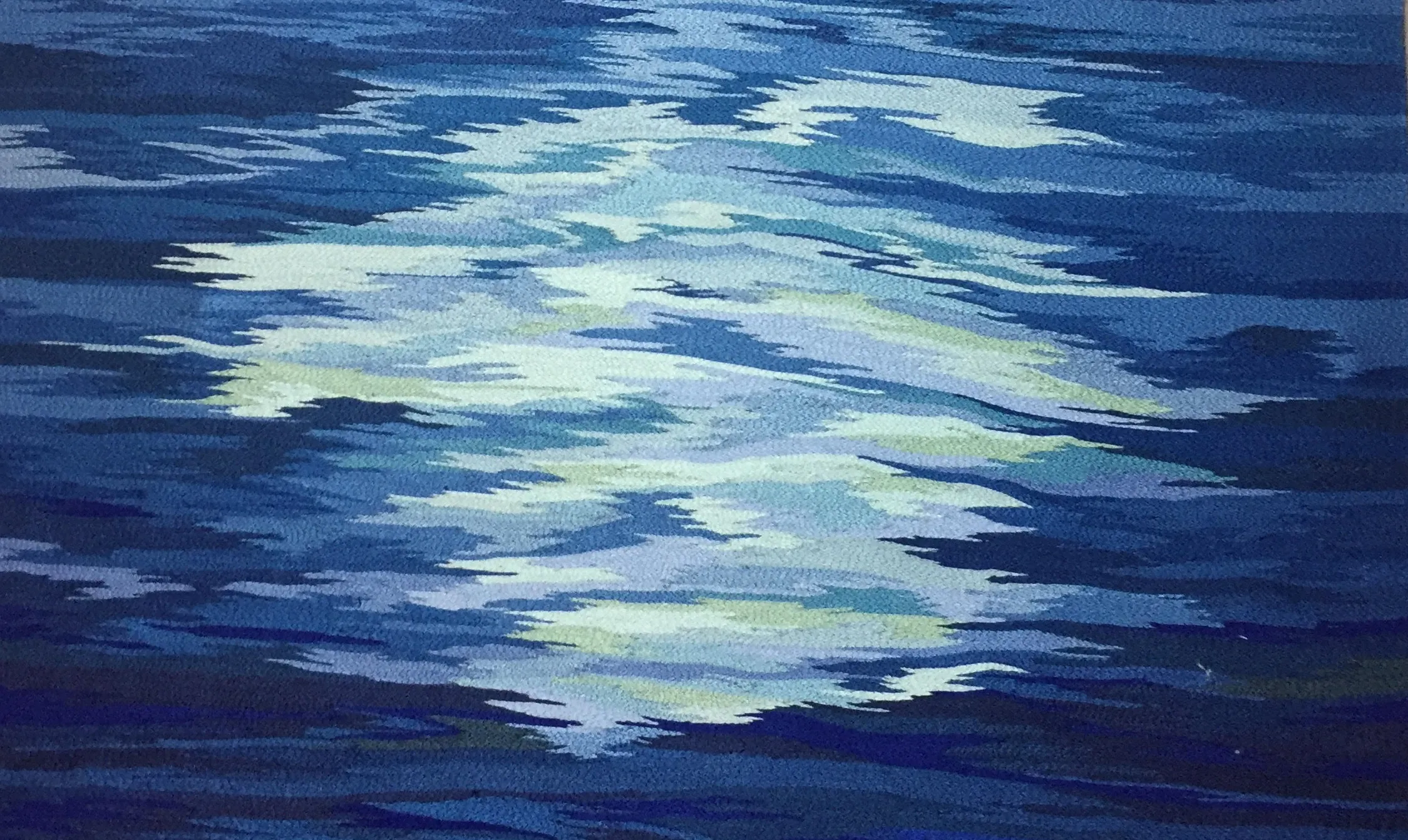
The Lunéville stitch, taken to the scale of a painting
Lesage and the ateliers: haute couture embroidery
The embroidered 20th century is written in Paris, in workshops whose names remain unknown to the public: Michonet, founded in 1858, supplier to Worth, taken over in 1924 by Albert Lesage; Rébé, Vermont, Montex, Hurel. It is they, and their petites mains, who embroider the collections: Schiaparelli’s surrealist jackets of the 1930s are Lesage embroideries, as would be decades of Dior, Saint Laurent and Chanel. In 2002, Chanel bought Lesage to save the savoir-faire; in 2021 it gathered its craft ateliers at le19M, at the porte d’Aubervilliers, where the École Lesage, opened in 1992, now teaches anyone who wants to learn. That school is where I trained. How these houses work today, from sample to dress, is detailed in the article Haute couture embroidery.
The revival: contemporary embroidery
The second fortress, art, remained, and artists took it: Louise Bourgeois sewing memory, Tracey Emin embroidering the intimate, Ghada Amer subverting the thread, and a whole generation since the 2010s that brought the needle back into galleries and onto social feeds. The movement goes beyond art: embroidery has become a practice again, slow and manual by choice, in a world that no longer is. This site belongs to that moment of the history: embroidered canvases hung like paintings, told in the article on contemporary embroidery, with a list of museums and schools to go further in the resources on art embroidery.
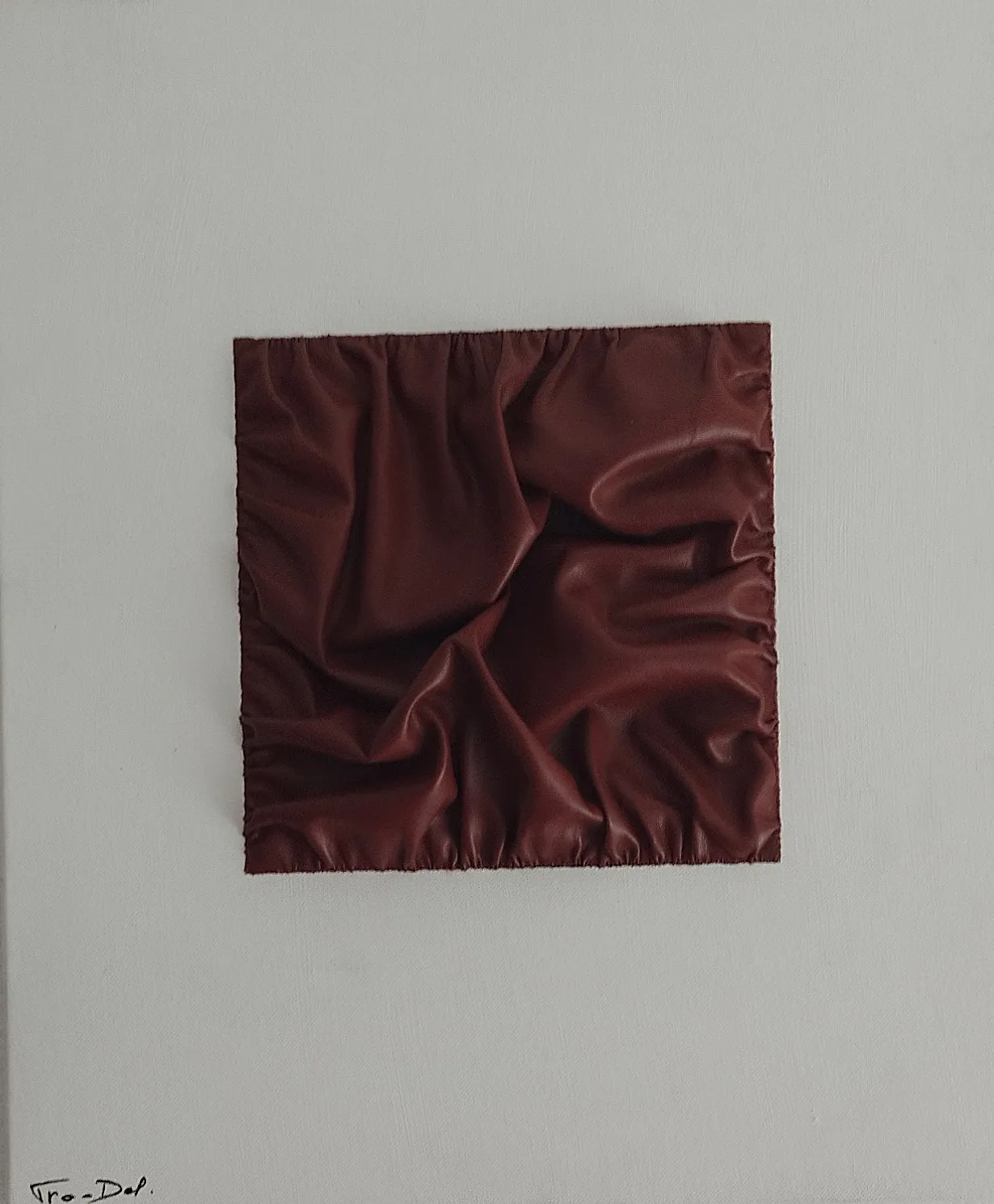
Contemporary embroidery: no motif left, only the material
Questions people ask
What is the oldest embroidery in the world? The oldest traces of embroidery are garments decorated with rows of sewn beads, found in burials around 30,000 years old in Russia. For surviving thread embroidery, China holds the oldest silk pieces, made before our era, and the frozen tombs of Siberia have yielded Scythian embroideries preserved remarkably intact.
Is the Bayeux Tapestry an embroidery? Yes, the Bayeux Tapestry is an embroidery, not a tapestry: its 68 metres telling the conquest of England in 1066 are embroidered in coloured wools on linen cloth, in stem stitch and couching, not woven on a loom like a true tapestry. It is kept in Bayeux, in Normandy, France.
Who invented the embroidery machine? The first embroidery machine was invented in 1829 by Josué Heilmann, in Mulhouse, in French Alsace. Improved and then industrialised, notably around St. Gallen in Switzerland, it moved everyday embroidery into factories within a few decades, and pushed hand embroidery towards its two refuges: luxury and art.
Where can you learn haute couture embroidery today? Haute couture embroidery is still taught in Paris, notably at the École Lesage, housed at le19M, Chanel’s building for the craft ateliers, and in Lunéville, where a conservatory passes on the stitch that bears the town’s name. These places teach the Lunéville hook, beading and goldwork to amateurs and professionals alike.
The artist behind Fra-Del trained at the Lesage school in Paris and embroiders on canvas with techniques inherited from this history. About Franck Delorme, embroidery artist →
The artworks that use this technique
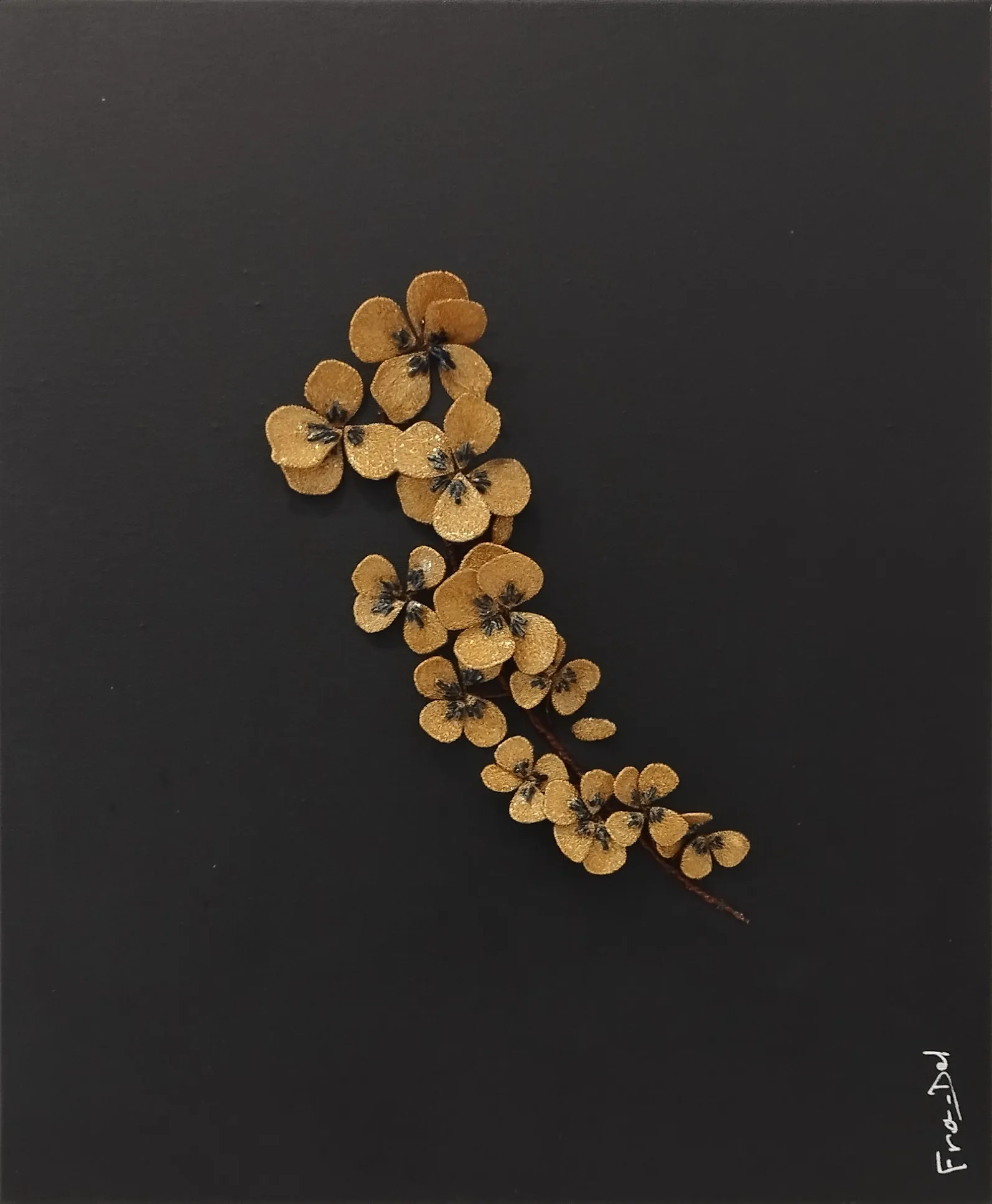
Discover the works to come
Leave your address and we will let you know whenever a new work is under way or finished.