Embroidery stitches: the seven stitches behind every work on this site
August 19, 2026
Contents
- Which embroidery stitch should you choose? The decision table
- Split stitch, the discreet outline
- Stem stitch, the line that turns
- Chain stitch, from drawing to filling
- Satin stitch, the surface that shines
- Long and short stitch, the stitch of gradients
- The French knot, texture in numbers
- Couching, the stitch for threads that cannot pass through
- Stitch direction and the light
- Questions people ask
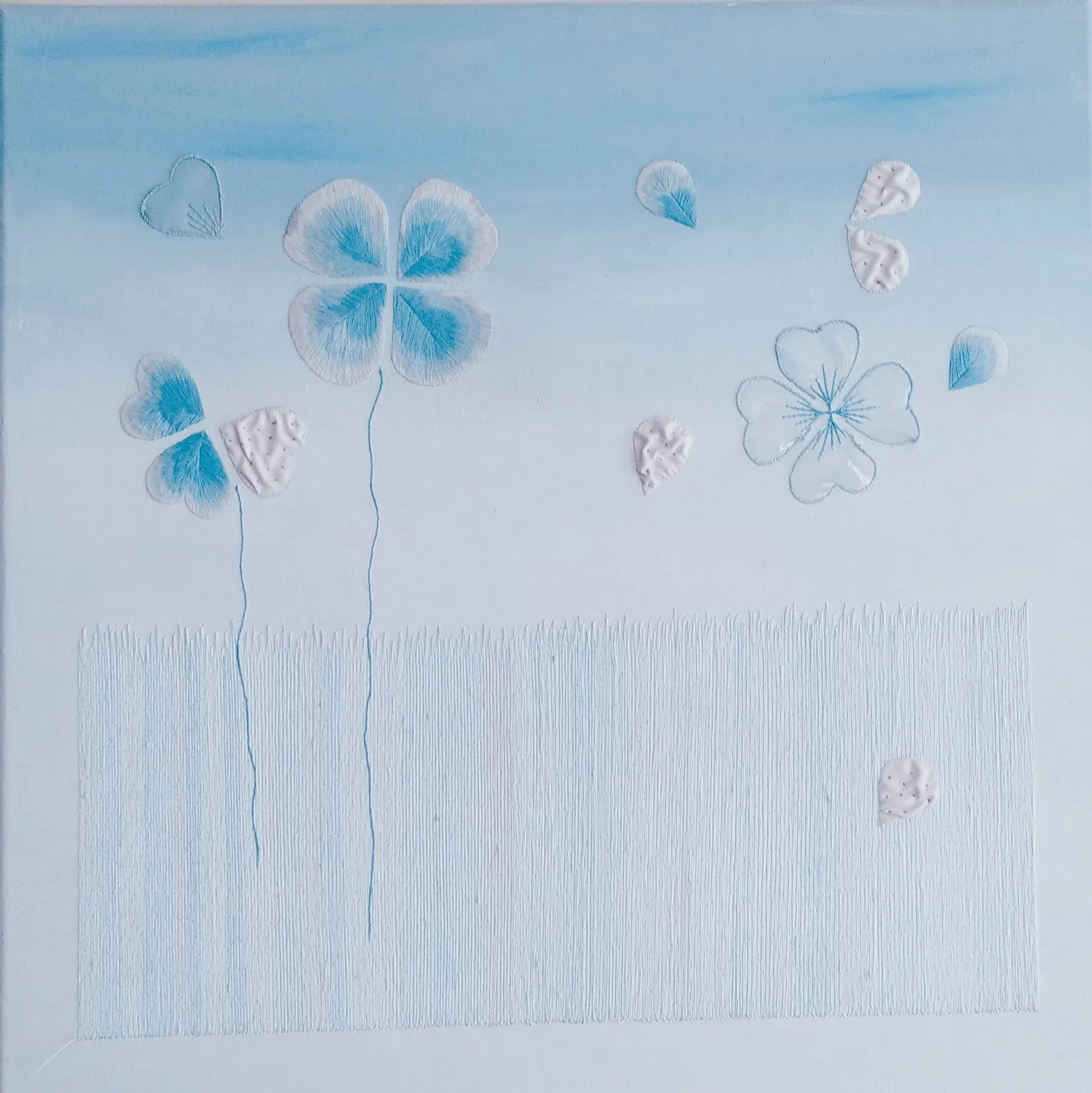
There are hundreds of catalogued embroidery stitches; my works stand on a handful. That is not a limitation, it is a method: each stitch is a tool with a precise use, and knowing which one to pick matters more than knowing a hundred. Here are the seven stitches behind everything I make, each shown where it actually works, inside a real piece, with the reason it is there and the moment you should not use it.
Which embroidery stitch should you choose? The decision table
| You want | The stitch for it |
|---|---|
| A fine, clean outline | Split stitch, or stem stitch |
| A line that turns (stems, curves) | Stem stitch |
| A thick, decorative line | Chain stitch |
| A small, smooth, shiny surface | Satin stitch |
| A large surface, a gradient | Long and short stitch |
| Grain, relief, a living mass | French knots |
| To lay a precious, thick or fragile thread | Couching |
The rest of the article unfolds each row of this table.
Split stitch, the discreet outline
The gesture: a straight stitch, then the needle comes up splitting the thread of the previous stitch through its middle. The resulting line is fine, supple and slightly raised, without the beaded grain of backstitch. It is the most underrated stitch in the repertoire: the faces of medieval Opus Anglicanum embroideries are worked entirely in split stitch, and it is split stitch that, sewn under satin stitch, gives that clean raised edge separating an embroidered shape from a cut-out one. When not to use it: with tightly twisted threads, which refuse to split cleanly.
Stem stitch, the line that turns
The gesture: stitches laid one against the next, each new stitch starting from the middle of the previous one, always on the same side. The line twists slightly, like a fine cord, and follows curves without breaking. It is the stitch of stems, as the name says, and the one I take for embroidered branches, like the brown stem carrying the flowers of Fleurs dorées. When not to use it: in sharp corners, where its twist makes a soft elbow; there, split stitch takes over.
Chain stitch, from drawing to filling
The gesture: a loop of thread held down by the next stitch, which opens its own loop, indefinitely. As a line, chain stitch makes a thick, supple stroke; in tight rows, it fills whole surfaces with a knitted texture. It is the single stitch of the Lunéville hook, which produces it continuously, from the back, at speed: the neck of my swan Odile is filled thread by thread with white-on-white chains, and all couture embroidery rests on this one loop. When not to use it: for very fine outlines, where it weighs too much.
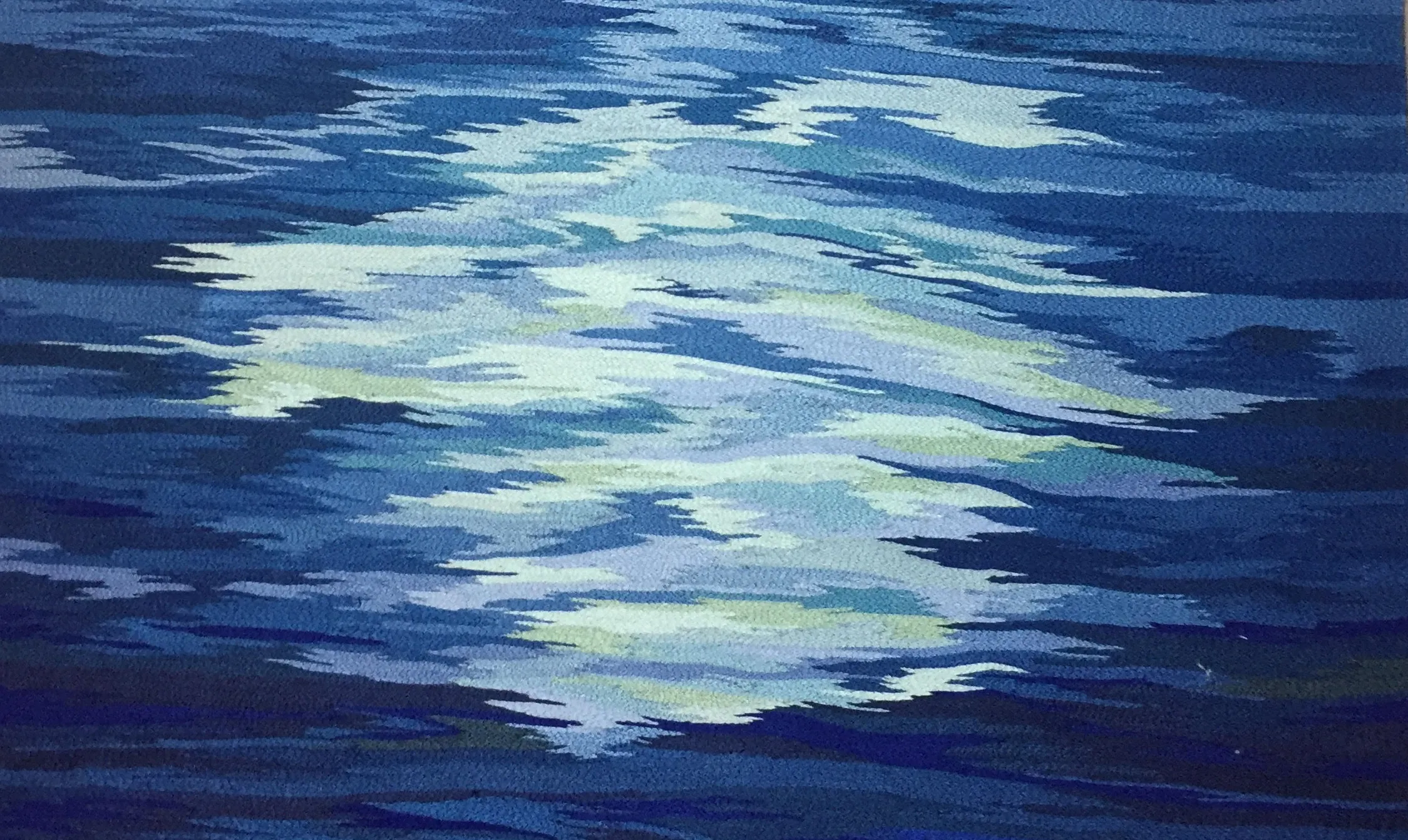
The chain stitch, row after row
Satin stitch, the surface that shines
The gesture: parallel stitches, laid edge to edge, crossing the whole shape. Nothing simpler to describe, nothing harder to do well: the shine comes from exact parallelism, and the clean edge comes from an outline of split stitch prepared underneath, which pads and raises the surface. It is the stitch of petals, beaks and small solid shapes. Its limit is physical: beyond about a centimetre of span, the threads float, snag and sag. A wider shape is filled with long and short stitch, or covered with couching.
Long and short stitch, the stitch of gradients
The gesture: a first row alternates long and short stitches; every following row, made of long stitches, pierces into the stitches of the row before. The boundaries between rows shift and disappear: you can change shade at every row without the eye ever finding the seam. It is the engine of thread painting, and the stitch of everything that wears fur or feather in my canvases: the coat of Chevreuil is built hair by hair this way, from russet to white. When not to use it: on very small shapes, where satin stitch is cleaner and faster.
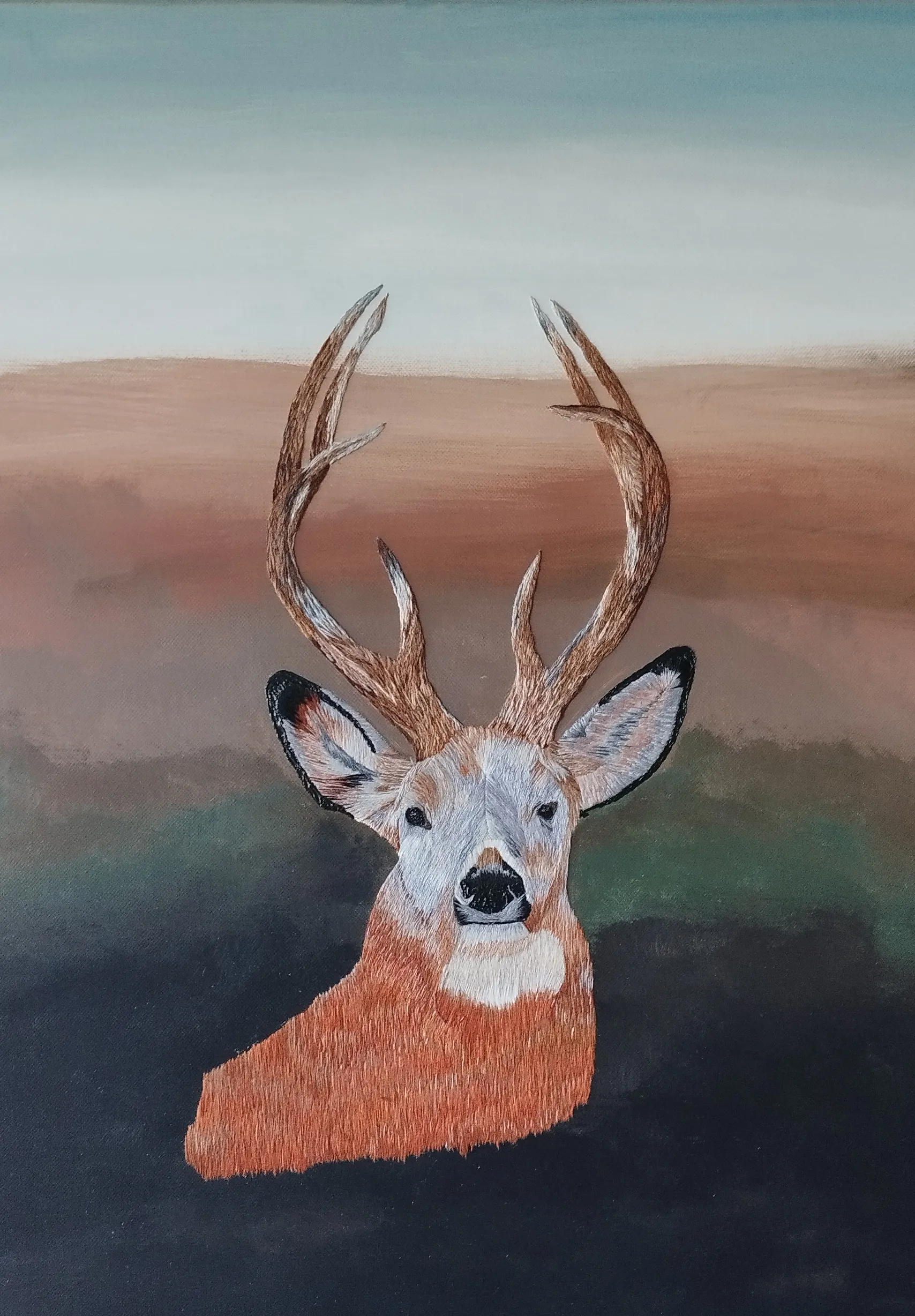
Long and short stitch: a gradient built hair by hair
The French knot, texture in numbers
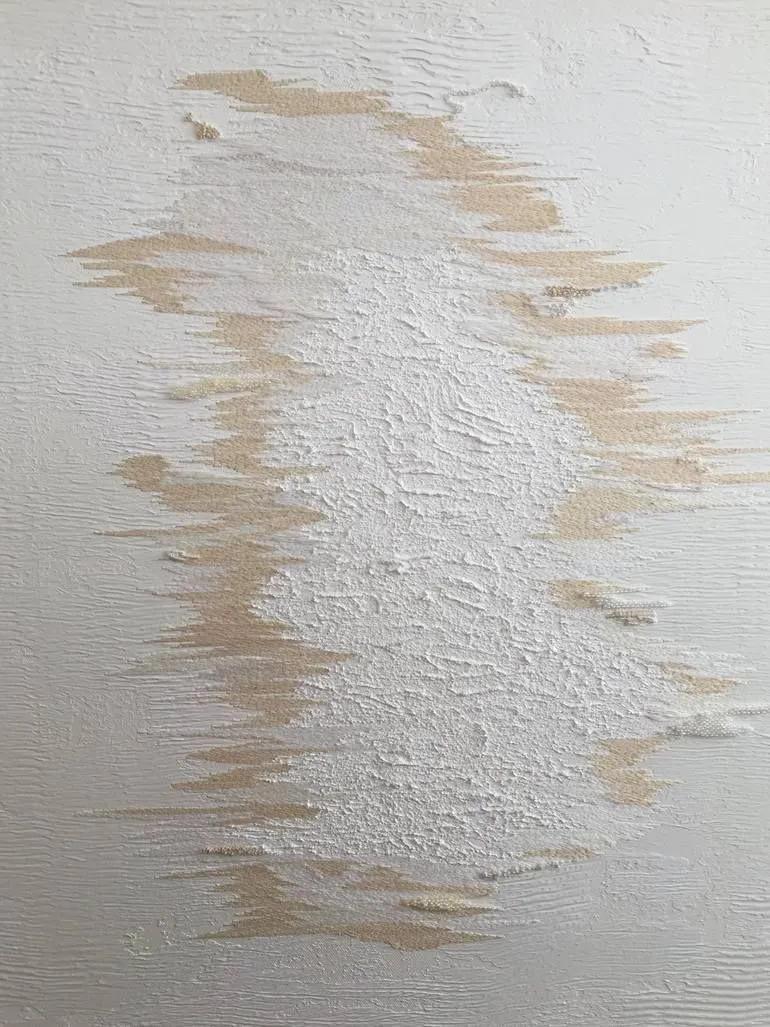
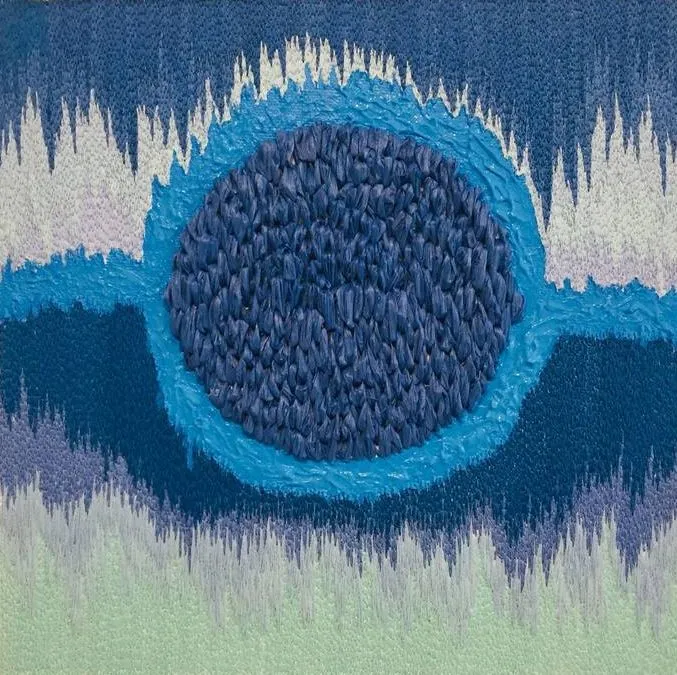
The gesture: the thread wraps once or twice around the needle, which goes back down right next to where it came up; the knot tightens against the fabric into a pearl of thread. One isolated knot makes a detail, a flower centre, an eye. But its real power is demographic: placed by the hundreds, knots make a grainy matter that exists in no other technique. The lower half of my canvas Losange cuir is a field of hundreds of cream raffia knots, tied one by one: stitches up close, ploughed earth from a distance. When not to use it: alone in the middle of a smooth surface, where it looks like an accident.
Couching, the stitch for threads that cannot pass through
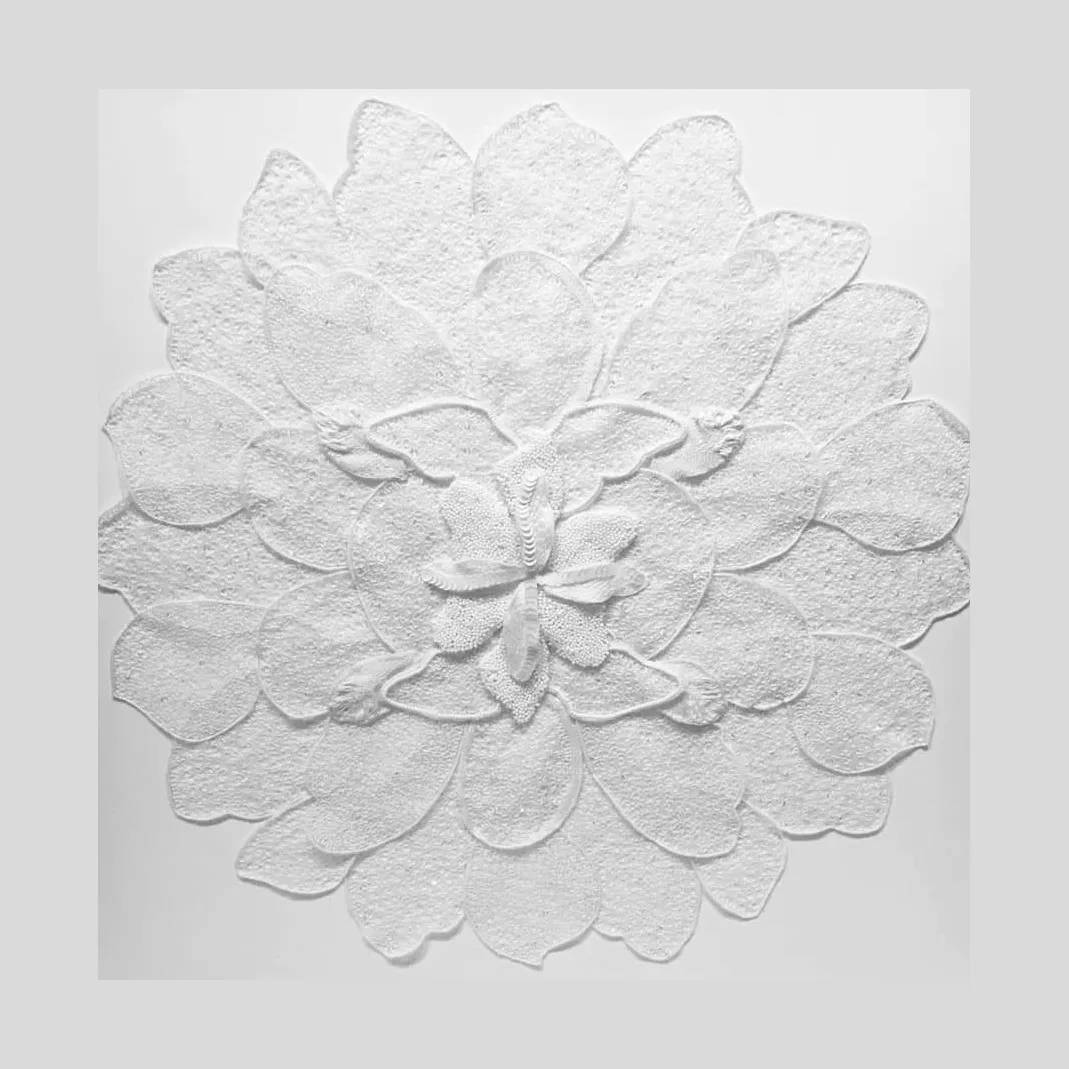
The gesture: the precious thread stays laid on the fabric, never passing through it; a second, fine and discreet thread fixes it with small regular stitches. It answers a question of material: gold thread, made of a metal strip wound around a silk core, would break if it passed through; thick thread would tear the fabric; fragile thread would wear out. Couching is the central gesture of goldwork embroidery, and the same logic applies rows of pre-strung beads, like the ones edging the petals of Singapour. When not to use it: for ordinary threads, which pass through perfectly well on their own.
Stitch direction and the light
One last piece of knowledge, common to all stitches: with the same thread and the same colour, two surfaces embroidered in two different directions do not have the same colour. Thread is a shiny cylinder; it reflects light along the axis it is laid on. That is why the satin stitch of a petal follows the vein, why the long and short stitch of a coat follows the hair, and why direction is decided before the first stitch, by drawing the guide lines on the fabric. A well-chosen stitch laid in the wrong direction is still a failed stitch.
Questions people ask
What is the easiest embroidery stitch for a beginner? The easiest embroidery stitch for a beginner is the stem stitch: a regular gesture that forgives small unevenness and follows curves well. Chain stitch comes right after, with its simple loop to learn. Start with lines, not fillings: one well-made outline teaches tension better than ten failed surfaces.
Which embroidery stitch fills a surface best? The best filling embroidery stitch depends on the surface: satin stitch for small shiny shapes under a centimetre, long and short stitch for large surfaces and colour gradients, chain stitch in tight rows for a knitted texture, couching to cover ground with a precious or fragile thread, and massed French knots for a grainy relief.
What is the difference between satin stitch and long and short stitch? Satin stitch covers a shape with parallel stitches of equal length: a smooth, shiny, single-colour surface that collapses beyond about a centimetre of width. Long and short stitch alternates stitch lengths, each row piercing into the previous one: it covers any size and allows invisible colour gradients across the surface.
What is couching stitch used for? Couching stitch is used to fix onto the fabric a thread that cannot pass through it: too thick, too fragile or too precious, like gold thread. The laid thread stays entirely visible on the surface, held by small stitches of a second, discreet thread. It is also how rows of pre-strung beads are applied.
The artist behind Fra-Del trained at the Lesage school in Paris and embroiders his canvases with the seven stitches in this article. About Franck Delorme, embroidery artist →
The artworks that use this technique
Discover the works to come
Leave your address and we will let you know whenever a new work is under way or finished.